Welcome to Collection 1 of my Pilgrim Meditations. There are about 20 meditations here. There will be many more in collections that follow.
Acts 16:22 The crowd joined in the attack against Paul and Silas, and the magistrates ordered them to be stripped and beaten. 23 After they had been severely flogged, they were thrown into prison, and the jailer was commanded to guard them carefully. 24 Upon receiving such orders, he put them in the inner cell and fastened their feet in the stocks.
:25 About midnight Paul and Silas were praying and singing hymns to God, and the other prisoners were listening to them. 26 Suddenly there was such a violent earthquake that the foundations of the prison were shaken. At once all the prison doors flew open, and everybody’s chains came loose. 27 The jailer woke up, and when he saw the prison doors open, he drew his sword and was about to kill himself because he thought the prisoners had escaped. 28 But Paul shouted, “Don’t harm yourself! We are all here!”
There are those who wonder what it is about the Christian faith that makes people sing. Singing is a common, yet rare, sort of thing. We sing in the shower when no one can hear us. We sing along with our favorite songs on the radio. In a crowded restaurant, we reluctantly sing happy birthday to people. We sing along at a concert. But imagine singing as a whole group at the office, it doesn’t happen all that often. Unless you happen to work for a rather unusual boss.
We want to sing, yet we hold back and hesitate to join in with others in public. Until we go to a place of Christian worship. Then we find singing to be something that is common. In fact, I have had people complain if the songs were too unfamiliar so that they could not sing along. They want to join in. It’s something we do as people of faith.
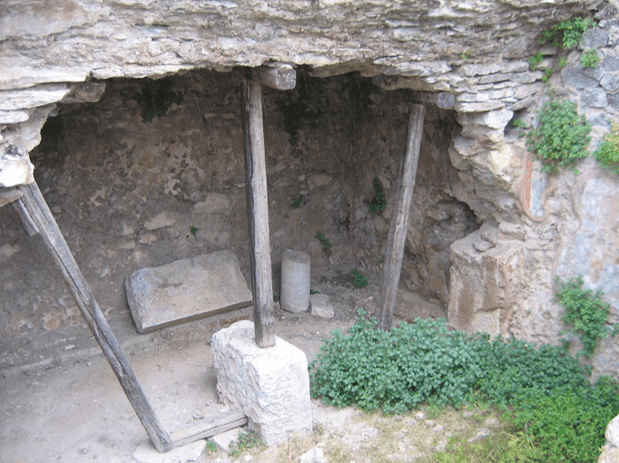
Paul and Silas had been beaten and put, most likely in the deep area of the prison that is shown above. The pictured area is just the entrance to the jail. Paul and his buddy were deep inside, secure in the stocks. But as night fell, they began to sing together some of the hymns of the Christian faith.
Understand now, these guys were hurting bad. They had been beaten severely by the authorities, their hands and feet are held securely in blocks of wood; yet they sing. Singing is not a way to ignore what is going on in my life. It is, rather, a way of being in touch, in harmony, with my fellow sufferers. The harmony eases the pain as it reminds us of the greatness of the God we serve. It tells us we are not alone in this journey of faith.
When I sing with others, we join in a long line of faithful people who began signing way back at the far side of the Red Sea as Israel rejoiced in the deliverance of God. Singing even gets me into prison with Paul and Silas, there to see the deliverance of God once again!
When I sing with others, we join in a long line of faithful people who began signing way back at the far side of the Red Sea as Israel rejoiced in the deliverance of God. Singing even gets me into prison with Paul and Silas, there to see the deliverance of God once again!
Ecclesiastes 11:1 Cast your bread upon the waters,
for after many days you will find it again.
:2 Give portions to seven, yes to eight,
for you do not know what disaster may come upon the land.
:3 If clouds are full of water,
they pour rain upon the earth.
Whether a tree falls to the south or to the north,
in the place where it falls, there will it lie.
:4 Whoever watches the wind will not plant;
whoever looks at the clouds will not reap.
:5 As you do not know the path of the wind,
or how the body is formed in a mother’s womb,
so you cannot understand the work of God,
the Maker of all things.
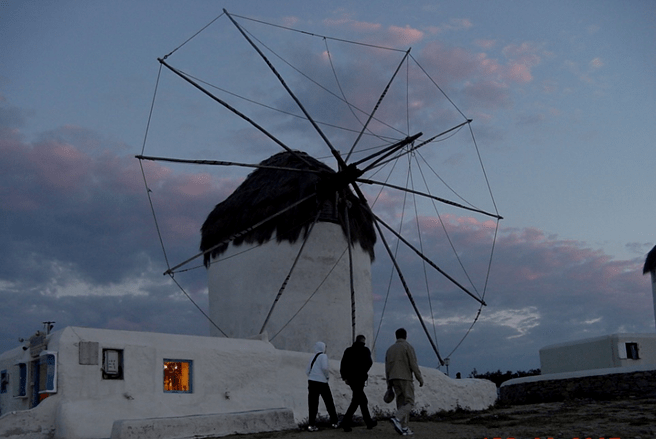
A windmill on the island of Mykonos gives the opportunity to reflect on the nature of the wind. We, in our modern days, have a great deal of wind predicting ability. Yet, for all our sophistication, we often do not know where the wind will blow, how strongly it will blow, which direction it will for sure come from, and so on. What will the temperature of the wind be? Will the storm front stall over some spot and bring flooding? We can try to predict, but we are often wrong, even at our weather forecasting best.
Yet the wind is our friend, and often it is harnessed by humanity to do our work for us. The windmills on Mykonos are just such a thing. They were built to grind the island’s grain. This was a huge step up from the old mortar and pestle that had been in use for so many generations. With the windmill, a whole village could grind their grain quickly and finely. The quality of the bread improved and along with it, the quality of life on the island.
The Bible tells us that even if we can harness the wind’s power, we do well to ponder who God is, since he is the creator of the wind. You will notice that the windmill in the photo does not have its “wings” unfurled. We only do that when we want the wind’s power; to leave the wings out would be to invite disaster for the whole windmill when the velocity of the air becomes too great. So we learn to be careful, even of the wind. We do not understand the work of God who is the maker of all things. We do not know the ways of the God whose creation can be good or bad depending on if we are prepared for what it might bring or negligent of it. God will always have his way. Our calling is to be aware of his working. And like the windmills on Mykonos, we will put out our wings when we need to sail in the power of God and we will pull them in when we just need to let go and let God be God.
Acts 16:11 From Troas we put out to sea and sailed straight for Samothrace, and the next day on to Neapolis. 12From there we traveled to Philippi, a Roman colony and the leading city of that district of Macedonia. And we stayed there several days.
13On the Sabbath we went outside the city gate to the river, where we expected to find a place of prayer. We sat down and began to speak to the women who had gathered there. 14One of those listening was a woman named Lydia, a dealer in purple cloth from the city of Thyatira, who was a worshiper of God. The Lord opened her heart to respond to Paul’s message. 15When she and the members of her household were baptized, she invited us to her home. “If you consider me a believer in the Lord,” she said, “come and stay at my house.” And she persuaded us.
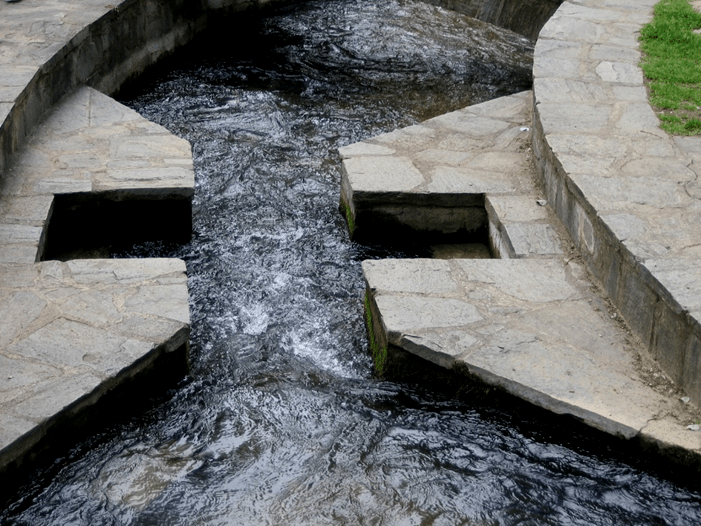
At the river outside of Philippi, there is a spot where the Greeks have built a baptismal fountain into the course of the river. This is the traditional spot of Lydia’s conversion to Christianity. Here she asked Paul to baptize her and her household with her. God was at work drawing people to himself in this new land. This was the first time anyone in Europe had heard the gospel and had responded. Some years before, there had been Europeans at Jerusalem on Pentecost who heard and believed the good news about Jesus. This, however, marked the first time anyone geographically located in Europe heard the Word of God and believed. It was something brand new. Earlier in the chapter, the vision Paul had which drew him and his companions to Europe had been recorded. Now they knew why God had brought them here. It was so that these people, too, could know Jesus and his salvation.
It was, some might say, an inauspicious start to the mission to Europe. After all, it was a woman who first heard and believed. As the text makes clear, it took men to make a synagogue and there were not enough Jewish men (it took ten) to form a synagogue in Philippi. But as he opened Lydia’s heart to believe, God showed that he is not so much interested in gender as he is interested in people. God wants us to look past the innate prejudices we all carry around in our hearts to see his image in the people, all the people, we meet each day. Too often we are willing to withhold God’s blessing to others when they don’t meet up to our expectations. We can be glad that Paul (to say nothing of God himself!) held no such qualms. He would speak of Jesus to any who would listen.
I hope that I too have that attitude inside of me. I want to offer God’s good gift of salvation to any and all who will listen. Have you ever heard?
Ephesians 2:11 Therefore, remember that formerly you who are Gentiles by birth and called “uncircumcised” by those who call themselves “the circumcision” (that done in the body by the hands of men)– 12 remember that at that time you were separate from Christ, excluded from citizenship in Israel and foreigners to the covenants of the promise, without hope and without God in the world. 13 But now in Christ Jesus you who once were far away have been brought near through the blood of Christ.
:14 For he himself is our peace, who has made the two one and has destroyed the barrier, the dividing wall of hostility, 15 by abolishing in his flesh the law with its commandments and regulations. His purpose was to create in himself one new man out of the two, thus making peace, 16 and in this one body to reconcile both of them to God through the cross, by which he put to death their hostility. 17 He came and preached peace to you who were far away and peace to those who were near. 18 For through him we both have access to the Father by one Spirit.
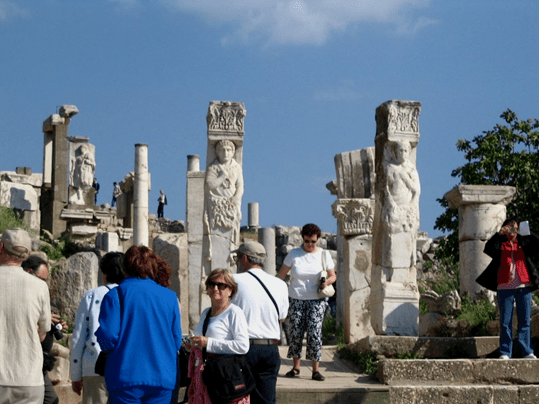
This view is of the gates which separated the upper class citizens of Ephesus from all the rest. My ancient history buff type friends tell me that only those who were citizens of Ephesus were allowed in the upper part of the city. The gates were designed in such a way that all those who passed through could be “inspected.” One could not drive a cart or chariot through the gates, so it was only those who made the grade who could be admitted to the upper level of the city. So it was literally the upper classes that could pass through the gates of Hercules into the city’s more elite area.
I could see where there could be a row at the gates when the guards stopped someone who thought they ought to be allowed into the upper area. The gates and the wall that extended from them became, then, a wall of hostility. Only those who belonged and could prove it to the guards were allowed above the gates. Everyone else was relegated to the area below the gates. Every day the Ephesians were reminded of who they were. Either they belonged to the upper classes or they did not. There was no recourse or appeal.
Paul used that fact to remind the Ephesians of what it was that Jesus had done. He had broken down the wall of hostility. In him, the two are now one. In him, those who were of Jewish descent and those who were the so-called Gentiles, both classes are made one. No longer do we have those who are excluded from membership in the covenant of God’s grace because of ethnic background. Now all those who are called by the name Jesus are one, together all are citizens of the kingdom of God. No longer are there guards at the gates of the kingdom of God to keep out those who do not belong. If one comes to the kingdom in the name of Jesus, that one is welcome too all the privileges of citizenship with Christ. The greatest privilege is that of having peace with God. A peace that is beyond description and that is given for free. One just has to approach the gates in the confidence that knowing Jesus makes me a citizen of glory.
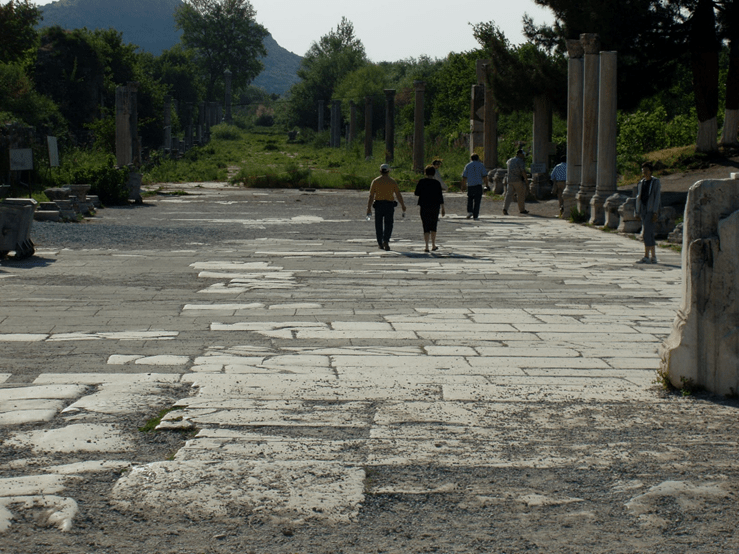
REV 2:1 “To the angel of the church in Ephesus write:
These are the words of him who holds the seven stars in his right hand and walks among the seven golden lampstands: 2 I know your deeds, your hard work and your perseverance. ….
:4 Yet I hold this against you: You have forsaken your first love. 5 Remember the height from which you have fallen! Repent and do the things you did at first. If you do not repent, I will come to you and remove your lampstand from its place. ……
:7 He who has an ear, let him hear what the Spirit says to the churches.
The church of Ephesus lived in a magnificent city. It had streets paved with a beautiful white marble which to this very day gives the impression of wealth and power. One can easily imagine how the church became proud of its position as the place where John the apostle lived and worked. As the place where Timothy, Paul’s own assistant, took up residence as the teacher for the church.
The apostle John had been removed from Ephesus by the authorities who didn’t want the teacher to be able to continue his teaching. He had been taken to an island called Patmos, located too far into the Aegean for anyone to swim back to the mainland. There he was left with other prisoners to fend for himself. It was on Patmos that Jesus appeared to him to give him the revelation which forms the last book of the Bible. But before he got to that, Jesus had something to say to the various churches to whom this was addressed. The first church addressed was the one at which John himself had been teaching.
It must have been a jolting experience for John to hear Jesus say, “But I have this against you, you have left your first love.” John is known as the Apostle of Love. Yet even his teaching had not been enough to hold this church true to her first love—Jesus. Jesus calls them to return to their original commitment. They had to leave their new love of pride, of thinking they were a great church in their own eyes. Instead they were to stop being enamored of their glory as a city and find their hope, their faith, and their love in the person of Jesus. The call still rings out to all who get too proud of themselves and lose their first love of Jesus. May you and I find our love directed only to Jesus who is our first and last love.
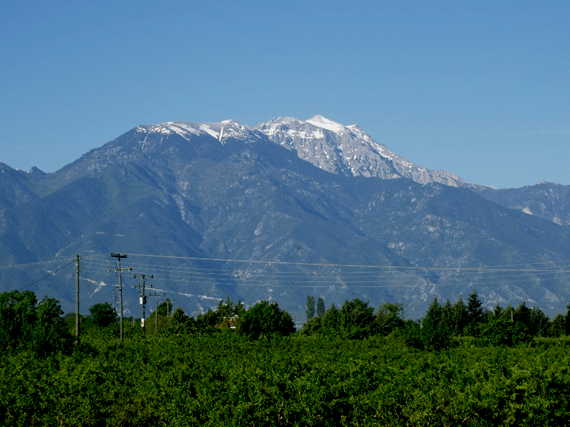
Psalm 15:1 LORD, who may dwell in your sanctuary?
Who may live on your holy hill?
:2 He whose walk is blameless
and who does what is righteous,
who speaks the truth from his heart
:3 and has no slander on his tongue,
who does his neighbor no wrong
and casts no slur on his fellowman,
:4 who despises a vile man
but honors those who fear the LORD,
who keeps his oath
even when it hurts,
:5 who lends his money without usury
and does not accept a bribe against the innocent.
He who does these things
will never be shaken.
Mount Olympus is the mythical home of the gods of the Greek pantheon. It was on this holy mountain that the gods had their dwelling places. It was off limits to the mere mortals who lived on the plains below the mountain that rose so majestically from the horizon. Mount Olympus was a place where no human being could go and survive. The gods would destroy any who so insolently dared to disturb their home territory.
In the mind of the ancient Hebrews a very similar concept had taken root. It was that the Lord lived on Mount Zion. However, there was one major difference in thought. Mount Zion was approachable. It was a place where a mere mortal could come into the holy presence of God himself. So the book of Psalms, which is itself the songbook of the temple on mount Zion, includes a song which tells about who is worthy to approach the holy mountain of God.
I find that the words of the Psalm challenge me in my inmost being. For while the final sentence says that the one who does these things will never be shaken, the items that precede it are much more indicative of what sort of person this is. The words that describe the one who can approach the lord on mount Zion are filled with action, these actions are the result of an inner character that has shaped the sort of person this is.
The one whose walk is blameless is a person who has made a decision to be true to the law which the Lord has laid out for us to follow. The one who keeps his word even if there are unpleasant results is a person who has a reliable character. This is no fair weather friend. This is one whose life is so focused on God that the very person of God comes shining through the life of this one who will never be shaken.
As I live in God’s presence, I am constantly seeking to do the right kinds of things. But this psalm tells me that if I am going to do the right kinds of things, I have to have the right sort of heart. Then I will be worthy of approaching God on his holy mountain. Then I discover that only when God gives me his Spirit on the merits of Jesus do I have that character within me. I pray you understand that too.
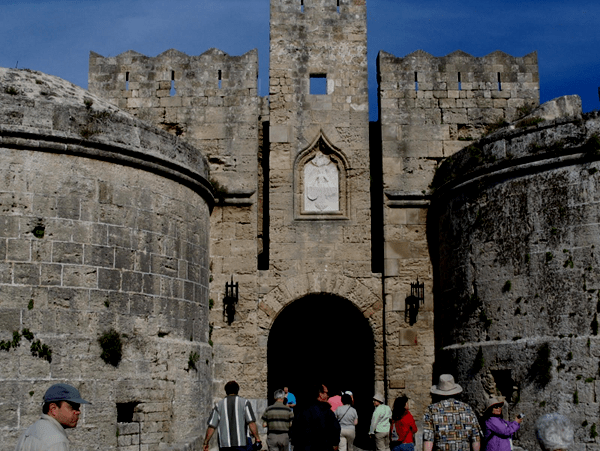
Psalm 24:7 Lift up your heads, O you gates;
be lifted up, you ancient doors,
that the King of glory may come in.
:8 Who is this King of glory?
The LORD strong and mighty,
the LORD mighty in battle.
:9 Lift up your heads, O you gates;
lift them up, you ancient doors,
that the King of glory may come in.
:10 Who is he, this King of glory?
The LORD Almighty–
he is the King of glory.
In my limited life experience, I had only a little bit of mental imagery to associate with the call of Psalm 24 for the ancient gates to be lifted up so that the king of glory could enter in. I try now to recall how weak the walls of a city were in my imagination. I think the insults of the detractors of Nehemiah’s walls, “If a dog leaped upon them they would topple!” were likely true of my idea of city walls. I had no idea of how impregnable a city’s walls could look until I made my way into ancient Rhodes. Then the concept of doors being lifted up and the gates lifting up their heads took on a whole new meaning for me.
Now I read those words and I begin to visualize what a stir it would cause if this happened. The gates of a city like Rhodes were shut tight. Yet when the King of glory approached, they would simply take it upon themselves to open up. The gates of Rhodes did not seem to me to be capable of lifting up for one thing, they swung inward. I can readily imagine gates that were constructed differently, i.e. they would lower from a recess above the opening. Yet to imagine them doing the rising on their own gives me a whole new appreciation for the joy the walls of a city can see in the approach of the person of Jesus. The walls and gates of the city are there because of the hatred of some humans for others. The walls serve to separate and divide. You are with us, but you are against us. Always we see this dividing of humanity into us and others.
But when the king of glory approaches, the walls cry out with joy and the gates lift up their own heads to welcome him in. Where the king of glory is, there is peace. Where the king of glory is, there is no need for dividing into us and them. Where the king of glory is, we put down our knightly weapons of hate and take up the towels of peaceful servanthood. Where the king of glory is, we discover a role reversal of the most wonderful kind. That which was made for keeping out now becomes the very thing which welcomes in. That is a role reversal we all desire. May our lives be ones in which it is seen in truth!
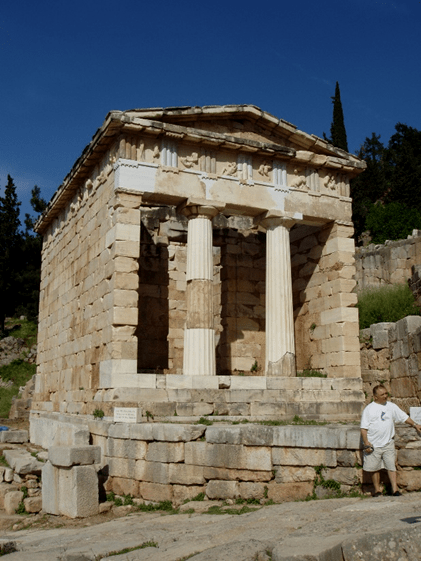
Malachi 3:8 “Will a man rob God? Yet you rob me.
“But you ask, `How do we rob you?’
“In tithes and offerings. 9 You are under a curse–the whole nation of you–because you are robbing me. 10 Bring the whole tithe into the storehouse, that there may be food in my house. Test me in this,” says the LORD Almighty, “and see if I will not throw open the floodgates of heaven and pour out so much blessing that you will not have room enough for it. 11 I will prevent pests from devouring your crops, and the vines in your fields will not cast their fruit,” says the LORD Almighty. 12 “Then all the nations will call you blessed, for yours will be a delightful land,” says the LORD Almighty.
We were at the holy place of Delphi when we stopped to observe the treasury of Athens in the oracle’s temple precincts. Here was a smallish building in comparison to many of the grand buildings we had seen in other temple areas. But it was a very important building for it housed the storehouse of the offerings to Apollo. At Delphi, it was believed in much of the ancient world that Apollo spoke to answer the deepest questions of humanity.
Should I go to war? Should I kill my enemy? What is the purpose of my life? And so on. Apollo was famous for being very elusive in answering the queries put to him. It would depend on how one understood the words, even down to the grammatical relationships of the words.
Yet, for all the purposeful vagueness in the answers, the people brought their offerings. And even before meeting with the oracle, they would deposit their gift for Apollo in the treasury of their city at the sanctuary. I think of how the true God also invites humanity to bring in the full tithe of our produce to the house of God. He challenges us to believe deeply that even if we do not know where the next gift is coming from, that we will trust the promise of God to do more for us than we ever do for the storehouse of his temple.
I asked if the givers of the gifts ever took their gifts back if they didn’t like the answer of Apollo to their question. I discovered that the gifts were given and, from then on, only those who were the priests had control of the gifts that were found there. It struck me how different that often is in our day when, as Christians bring their gifts to the house of God, they want to know for sure who is getting what benefit from their gifts. We tend to want to control our giving to the extent that we will refuse to give if we happen to not like what our spiritual leaders do with the funds entrusted to God. I am going to renew my commitment to honoring those who are entrusted with the dispersal of the largesse of God for others. They are the treasure keepers for God and so they deserve my respect.
Isaiah 62:6 I have posted watchmen on your walls, O Jerusalem;
they will never be silent day or night.
You who call on the LORD,
give yourselves no rest,
:10 Pass through, pass through the gates!
Prepare the way for the people.
Build up, build up the highway!
Remove the stones.
Raise a banner for the nations.
:11 The LORD has made proclamation
to the ends of the earth:
“Say to the Daughter of Zion,
`See, your Savior comes!
See, his reward is with him,
and his recompense accompanies him.’ “
:12 They will be called the Holy People,
the Redeemed of the LORD;
and you will be called Sought After,
the City No Longer Deserted.
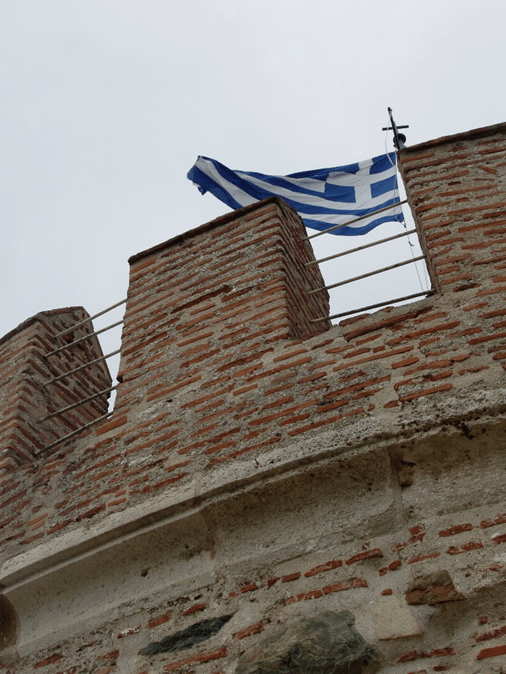
In the city of Thessalonica there is a strong tower that stands as a sentinel over the harbor. From the ramparts flies the flag of a proud Greek nation for whom shipping is a major industry. The sea is their “native land” which they cultivate in such a way as to find commercial success on the waves. The flag of Greece flies above the harbor with a grace that draws the eye toward the sky.
It was as I saw this flag flying high that I thought of the many times when the Bible tells us about the banner of the Lord. The flag of a nation declares something deeply true about the country that is stands for. It is a symbol of the people who call it their own. The Greek flag is the rallying point for the people of that ancient land.
In the Scrpture quoted above, we find the Lord calling on the watchmen of the walls to raise a banner for the people of God. For the Savior is coming to them. It is as if the people in the city are sensing that they are besieged by doubt, by the feeling of desertion by their God. But the Lord is shouting out to the watchmen, “Raise the banner for my people!” They will no longer be deserted nor forgotten. They will now be sought after and desired by God. The flag that flies overhead will be the visible messenger of the love of God. The flag, the banner of God, will declare that here are the people of God.
Such a vision of hope is the Lord’s banner that his people will instinctively know that where that flag is, there is hope and faith and love. It is tee banner of the cross of Jesus Christ which says, “God loves you and forgives you” to all who will rally to it!
Revelation 22:17 The Spirit and the bride say, “Come!” And let him who hears say, “Come!” Whoever is thirsty, let him come; and whoever wishes, let him take the free gift of the water of life.
:18 I warn everyone who hears the words of the prophecy of this book: If anyone adds anything to them, God will add to him the plagues described in this book. 19 And if anyone takes words away from this book of prophecy, God will take away from him his share in the tree of life and in the holy city, which are described in this book.
:20 He who testifies to these things says, “Yes, I am coming soon.”
Amen. Come, Lord Jesus.
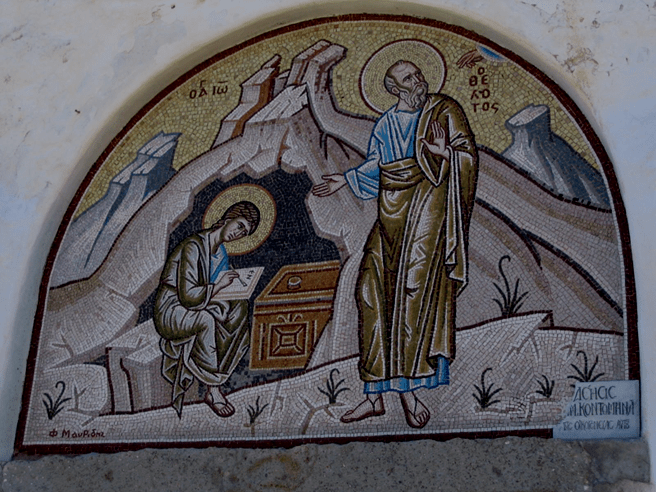
It was on (Orthodox) Easter that we made our way from our ship to the island of Patmos. It was a beautiful Sunday morning. The sun shone with a brightness that drew us out of the loss of Good Friday into the wonder of what is the first day of a new era as we anticipate what God will do when he makes us all like unto his Risen Son who is the first fruits of all who believe. It was a day of wonder as we thought about what God will do in Christ when the culmination of all things takes place.
It seemed so appropriate to make our way to the cave that is reputed to be the place where John received the Revelation that bears his name. There our guide had us sit in a cool, damp place as she recited for us the beginning of the book of Revelation. It was a moment of wonder for me as I thought about what John went through for the sake of the gospel.
Patmos, you see, was a prison island. Those who were the enemies of the state were deported to this island from which it would have taken a strong swimmer to reach the mainland. Yet from its barren heights, John could see the mountains of the place from which he had been exiled. Very little grew on Patmos in the days of John. What little there was required a considerable amount of ingenuity to figure out how to use it. My understanding is that when the government exiled a person to a place such as Patmos, they did not send them to the island with lots of tools, generators, gift cards good at Home Depot, etc. No, you arrived on the island with the minimal clothes on your back and you made due with what you could find. Remember that the rest of the inhabitants were also enemies of the state. It was not a county club atmosphere in the least.
But here on Patmos, John received a vivid revelation that said to him and to all who will read it, Jesus is Lord and there is no other! You know, we can use that message today!
Ecclesiastes 2:4 I undertook great projects: I built houses for myself and planted vineyards. 5 I made gardens and parks and planted all kinds of fruit trees in them. 6 I made reservoirs to water groves of flourishing trees
:11 Yet when I surveyed all that my hands had done
and what I had toiled to achieve,
everything was meaningless, a chasing after the wind;
nothing was gained under the sun.
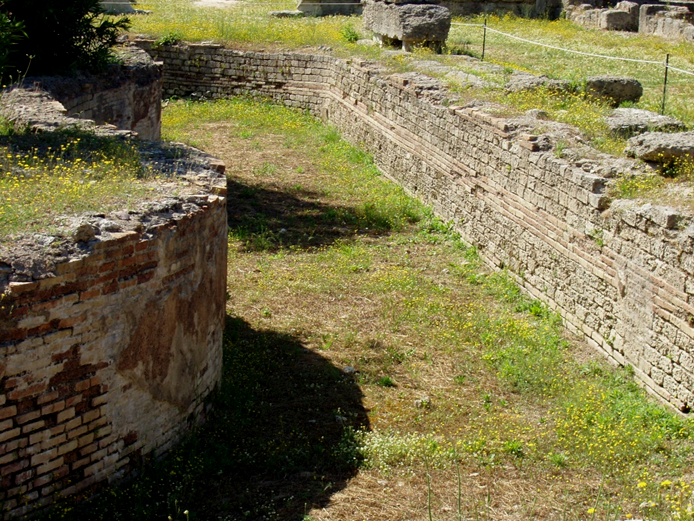
In the ancient ruins of Olympia, there is this structure that is only seen in part in this photo. Archaeologists have determined that this was a swimming pool that served the hotel on the property. Only the most affluent would have been in this hotel. The rest of the multitudes attending the Olympic Games would have been camping under the trees in the nearby forest. As I wandered around on the ancient ruins, I could almost hear the voices of those who were a part of the crowd that stayed at the four, or maybe five, star resort at Olympia. They would be saying to each other, “Man I’ve gotta get me one of these when I get back home.” “Yeah, this is the life man!” But meanwhile, the reason they were there was to observe the great races that took place in the stadium.
The races were a way to prove which city had the best physical specimens. The athletes were given the best the city had to offer so that when they got to the games, all the spectators would be amazed at the beauty and the strength of each city’s runners. Yet, the truth of the matter was that the writing of Solomon in Ecclesiastes was true in Greece as well as in Israel. All the building projects, all the gardens, and all the rest amount to no more than a chasing after the wind. Happiness will not be found in getting the latest thing. It will not be found in being the greatest runner. It will not be found anywhere “under the sun.”
We live in our world with a God-shaped vacuum. The entire world hates a vacuum and many things rush to fill it. Fame and wealth come to most people’s minds first of all. But living the cushy life won’t fill the space that only God can fill. It is my prayer for you that you will discover that God alone can fill your heart’s empty spaces. No swimming pool in the classy resort will ever fill God’s void in your life. Turn to him and be filled!
Philippians 4:8 Finally, brothers, whatever is true, whatever is noble, whatever is right, whatever is pure, whatever is lovely, whatever is admirable–if anything is excellent or praiseworthy–think about such things. 9 Whatever you have learned or received or heard from me, or seen in me–put it into practice. And the God of peace will be with you.
I am convinced that this pair of sentences in Philippians 4 is one of the most helpful couplets for our life as God’s people. In these few words Paul gives us a mind-full of things that can occupy us each day. When we were on our trip in Greece, I found myself caught up in these things.
I was away from the every day pressures of ministry. So I was away from the things that so often bog me down – the effects of sin in the lives of people in my church, the sorrows that come with bereavement, the concern for the young people who are growing up in a world of temptation, the pain of distressed people whose lives have been overturned by some calamity, the list could go on and on. When one is constantly bogged down with the issues of life that are difficult, one loses sight of the good things that are all around us.
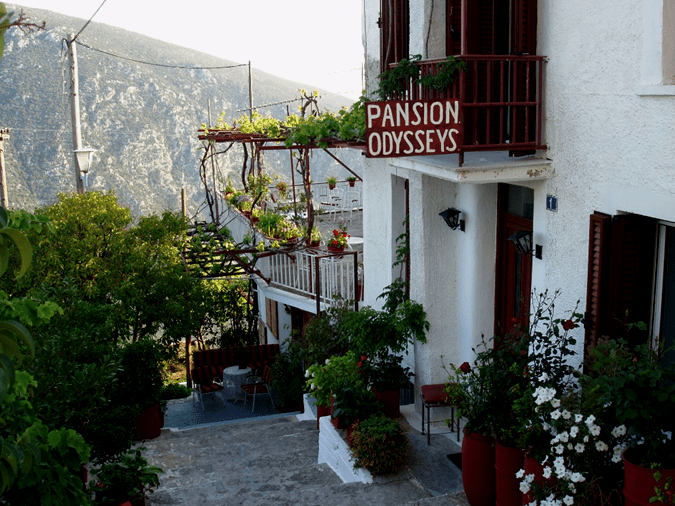
So I found myself wandering around Delphi one evening with Janine. We explored this street and then that one. At one point, we found this delightful spot overlooking the valley. I took a photo since what I saw before me was an illustration of what Paul was writing about. It was a lovely sight. It was there down around the corner from the beaten path. It was just waiting to be discovered by one who was willing to search it out. Sure the beaten bath was intriguing too, but there was something about this spot that stands out in my mind. It was hidden; it needed to be discovered.
I think that much of what is true, noble, right, pure, lovely, admirable, excellent, or praiseworthy is not immediately obvious to us. It needs to be sought after and discovered there just around that corner. The usual might be one of those things, but often it is only an imitation of the best. I need to see that my time is so limited that what I need more than anything else is to search out the best and think on those things. The view of this little spot was lovely and it lives on in my memory. I hope you have such places to retreat to as well.
JOB 12:4 “I have become a laughingstock to my friends,
though I called upon God and he answered–
a mere laughingstock, though righteous and blameless!
:5 Men at ease have contempt for misfortune
as the fate of those whose feet are slipping.
:6 The tents of marauders are undisturbed,
and those who provoke God are secure–
those who carry their god in their hands.
:7 “But ask the animals, and they will teach you,
or the birds of the air, and they will tell you;
:8 or speak to the earth, and it will teach you,
or let the fish of the sea inform you.
:9 Which of all these does not know
that the hand of the LORD has done this?
:10 In his hand is the life of every creature
and the breath of all mankind.
:11 Does not the ear test words
as the tongue tastes food?
:12 Is not wisdom found among the aged?
Does not long life bring understanding?
:13 “To God belong wisdom and power;
counsel and understanding are his.
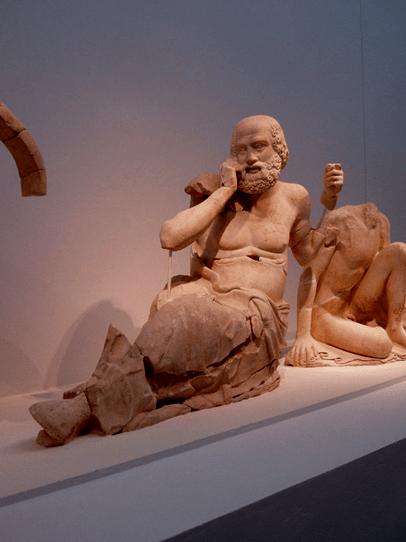
The pediment of the temple to Apollo at Olympia included this figure of an old man reclining and looking with some sorrow at the events that are depicted. When the young man whose heart was set on winning the hand of a fair maiden cheated at the race that was to determine whether he would receive the hand of the maiden from her father, the old man looked on in sorrow.
The old man is chagrined at thee apparent insight the young man has shown in defeating the maiden’s father. But at the same time, he knows that any who live in deceit will, sooner or later, lose to deceit. The truth of the matter is that only God has wisdom as Job declares in this soliloquy. Deceit and trickery are known to God and his arm of justice will see to it that such dishonorable things are repaid for what they are.
I found it instructive to see the ancient Greeks knew such a teaching as well. It seems sot me that there is a profound sense of wisdom and its attendant graces that those who ask the bird of the air, the fish of the sea, and the very earth itself that will discern. God gives a sense of wisdom and insight into the way the world works to all who are ready tot listen. It’s called common grace in theology. It’s the gift of God to all who are ready to listen to the mute earth itself as it teaches us about God. I hear the songs of the birds and I know they are praising the one who made them to be able to sing. As they do so, they bless me with the songs of the all wise God.
James 3:13 Who is wise and understanding among you? Let him show it by his good life, by deeds done in the humility that comes from wisdom. 14 But if you harbor bitter envy and selfish ambition in your hearts, do not boast about it or deny the truth. 15 Such “wisdom” does not come down from heaven but is earthly, unspiritual, of the devil. 16 For where you have envy and selfish ambition, there you find disorder and every evil practice.
Psalm 28:2 Hear my cry for mercy
as I call to you for help,
as I lift up my hands
toward your Most Holy Place.
:3 Do not drag me away with the wicked,
with those who do evil,
who speak cordially with their neighbors
but harbor malice in their hearts.
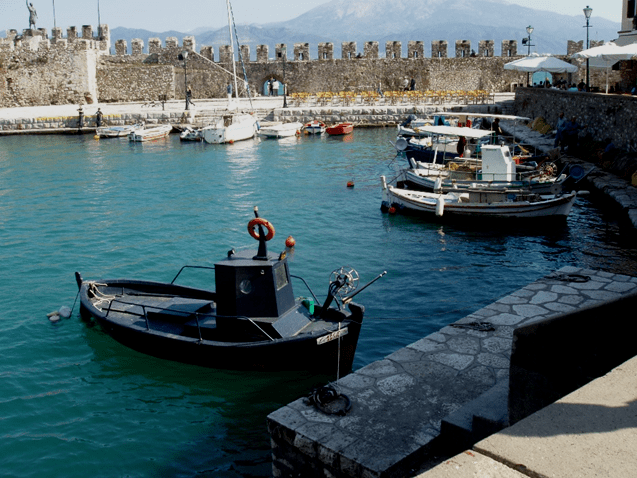
I’m not sure of the name of this harbor. It was a quick stopping off place on our journey toward Thessalonica. We could walk along the quay to the entrance to the harbor which was a gate in the wall seen in the background. The wall and the gate made it possible for this to be a quiet harbor for the small boats that can fit through the gate. No matter how the tempest might rage outside the wall in the open sea, in the harbor it is quiet and protected. Here there is a security that cannot be found just a few hundred yards away. Out there, all is up for grabs; here it is secure.
I find it worthy of note that when the Bible talks about a harbor it often has to do with what we are protecting in our hearts. What is it that we have put into our hearts for safe-keeping? The reading for James asks if we are protecting envy in our hearts. Are we keeping that monster which destroys relationships safe when we ought to be leaving it outside the walls so it can be destroyed? The psalmist wonders if we are keeping malice in the harbor of our heart. Malice is that attitude that declares “I will do such and such to make life miserable for you.”
What do I have in my heart? It is a safe harbor for something. What exactly have we put there and how is it affecting our lives? What we harbor in our hearts will have a much greater opportunity to survive any storm in our lives than that which is outside. May we harbor the Word of God in our hearts and allow it to drive out all that is evil. The Word of God is a powerful force for good. When the Word is anchored in our hearts, it will fill us with a life that cannot be snuffed out by any storm that comes our way.
Psalm 104:1 Praise the LORD, O my soul.
O LORD my God, you are very great;
you are clothed with splendor and majesty.
:2 He wraps himself in light as with a garment;
he stretches out the heavens like a tent
:3 and lays the beams of his upper chambers on their waters.
He makes the clouds his chariot
and rides on the wings of the wind.
:10 He makes springs pour water into the ravines;
it flows between the mountains.
:11 They give water to all the beasts of the field;
the wild donkeys quench their thirst.
:12 The birds of the air nest by the waters;
they sing among the branches.
:13 He waters the mountains from his upper chambers;
the earth is satisfied by the fruit of his work.
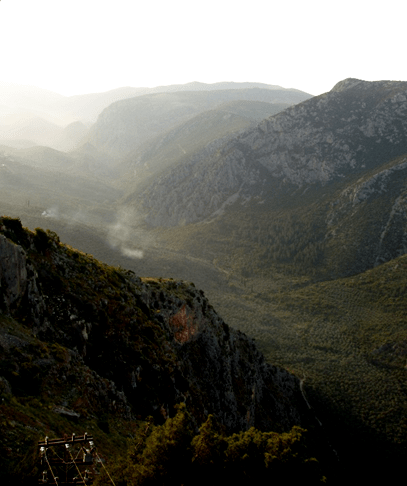
The mountains and valleys at Delphi are a sight which lifts the human spirit. The view in this photo was from the balcony at the hotel in which we stayed for the evening. We could look out over the valley and see for miles and lies. I found myself thinking of the many times in the Psalms that the psalmist praises God for the wonder of the created order. The psalmist, it seems to me, lived among mountains and saw in them the Lord’s creative power.
The morning we awakened in Delphi, I looked out from the balcony and saw how the skies simply glowed with light. My mind went to the verse from Psalm 104, “He wraps himself in light as with a garment.” My heart was stirred with the beauty of seeing that verse come to life before my eyes. The morning mists simply glowed with the ethereal presence of God. I found myself wanting to linger and drink in the wonder of the slowly changing character of the light as the sun rose further and further into the sky.
Meanwhile, below us, one could just make out a stream that meandered its way down the valley. It told of the care the Lord took to water the trees that fill the valley. They are olive trees. The tour guide again made the point of the ancient character of much of Greece when she informed us that this was the largest olive grove in Greece, consisting of some two million olive trees, some of which have been producing olives for about 800 years. Some of the trees we could see below us had been producing olives already when the Third Crusade took place.
God’s ways are ancient ways. His eternal being is so far beyond our temporal understanding that we can only worship one so great and so wonderful.
“O LORD my God, you are very great;
you are clothed with splendor and majesty.”
Psalm 49:5 Why should I fear when evil days come,
when wicked deceivers surround me—
:6 those who trust in their wealth
and boast of their great riches?
:7 No man can redeem the life of another
or give to God a ransom for him–
:8 the ransom for a life is costly,
no payment is ever enough–
:9 that he should live on forever
and not see decay.
Proverbs 18:10 The name of the LORD is a strong tower;
the righteous run to it and are safe.
:11 The wealth of the rich is their fortified city;
they imagine it an unscalable wall.
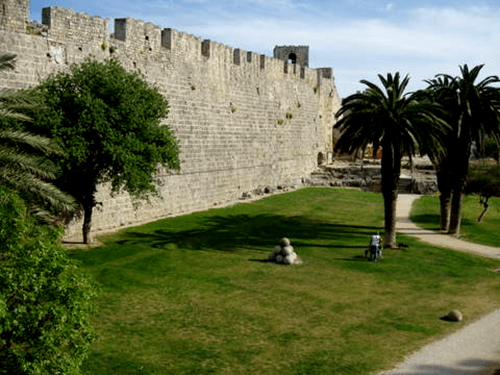
This wall which surrounds the city of Rhodes is just one of several walls that protected the city in time of war. It gives us a sense of what the Psalmist and the wise man of Proverbs were speaking. Walls were built for protection. It was only the wealthy cities that could build walls that were large and virtually impregnable. They would throw fear into the heats of would be attackers who knew that to defeat the city meant having to scale the walls that faced them. It wasn’t just an exercise in rock wall climbing, however. Each of the indentations at the top of the wall would have fearless defenders doing their best to destroy anyone who had the temerity to try climbing their walls.
The two texts tell us that wealthy people often think of their money as though it were a strong wall that gives them protection. In fact, it does often seem that those who are wealthy have more of an opportunity to beat some charge against them than do others who are poor. The wealthy then begin to trust that their money is a strong tower of protection. It will keep them safe when others surround them.
But what does the poor follower of Jesus do? Here too the psalmist and wise man give us an answer. They remind us that no money will ever buy off God as our judge. No one can afford to pay the ransom price that is on his or her head. God knows that we are enslaved to the Evil One and Satan is not about to let us go for free. A ransom must be paid. That is what Jesus did. He paid the ransom price on our heads and so we are set free.
Now what? We can run to the name of the Lord, to his character, his person. Because his name is a strong tower. When we run to it we are safe. Those who do not have money to use as a strong tower have the name of the Lord. It is more effective than gold; it is more secure than Rhodes ever was; it is the source of the ransom that, once paid, makes possible life everlasting. Who’d want gold when we can have the name of the Lord
1Kings 5:13 King Solomon conscripted laborers from all Israel–thirty thousand men. 14 He sent them off to Lebanon in shifts of ten thousand a month, so that they spent one month in Lebanon and two months at home. Adoniram was in charge of the forced labor. 15 Solomon had seventy thousand carriers and eighty thousand stonecutters in the hills, 16 as well as thirty-three hundred foremen who supervised the project and directed the workmen. 17 At the king’s command they removed from the quarry large blocks of quality stone to provide a foundation of dressed stone for the temple. 18 The craftsmen of Solomon and Hiram and the men of Gebal cut and prepared the timber and stone for the building of the temple.
I Kings 6:7 In building the temple, only blocks dressed at the quarry were used, and no hammer, chisel or any other iron tool was heard at the temple site while it was being built.
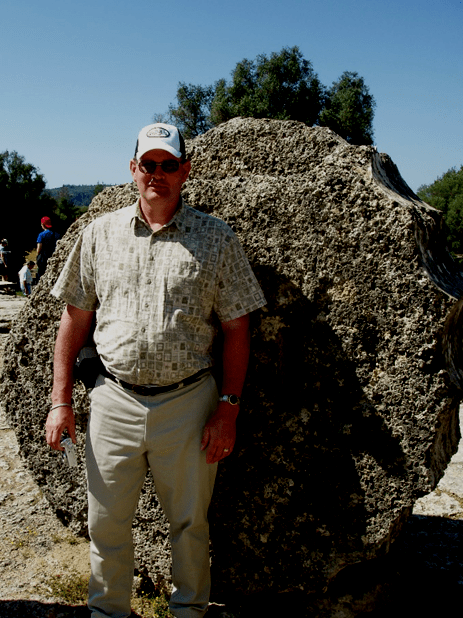
My touring buddy Wendell posed for me by this so-called drum of stone from a pillar at the site of ancient Olympia. Wendell’s height is about four cubits, if I have the idea of cubit correct. These blocks of stone are so amazing to me. The size and the weight of them is far beyond anything I could imagine. I will be the first to admit that I am not a builder, but when I think that the ancient Greeks did this all without the help of modern tools, it seems to me a significant feat of workmanship. The effort required to move a block of stone like the one he is standing next to would be enormous. Yet, these ancients did it not just once, but hundreds of times. And how in the world did they lift them up and set them on top of each other so that they would gently taper from the ground up? And how did they get each drum to set on the next so perfectly?
All of this comes to mind as we read of the work of building the temple of the Lord that Solomon constructed to the glory of God in Jerusalem. He used thirty thousand men who were conscripted to the work of being stonecutters and (here is the tough part) carriers. The reason I think that was the tough part is because all the work of the stone cutters was done away from the building site itself. So the carriers had to move everything to the building site without chipping it or damaging it in any way. It seems to me that such an undertaking is an endeavor of sheer courage. In fact, we just may be speaking of Jewish chutzpah here!
When I think of doing some thing for God, I am often deterred by the idea that it might just be too much work. But after being in Greece and seeing what I saw, I am beginning to believe that doing things for God means rolling up the old work sleeves and digging in.
1 Corinthians 8:4 So then, about eating food sacrificed to idols: We know that an idol is nothing at all in the world and that there is no God but one. 5 For even if there are so-called gods, whether in heaven or on earth (as indeed there are many “gods” and many “lords”), 6 yet for us there is but one God, the Father, from whom all things came and for whom we live; and there is but one Lord, Jesus Christ, through whom all things came
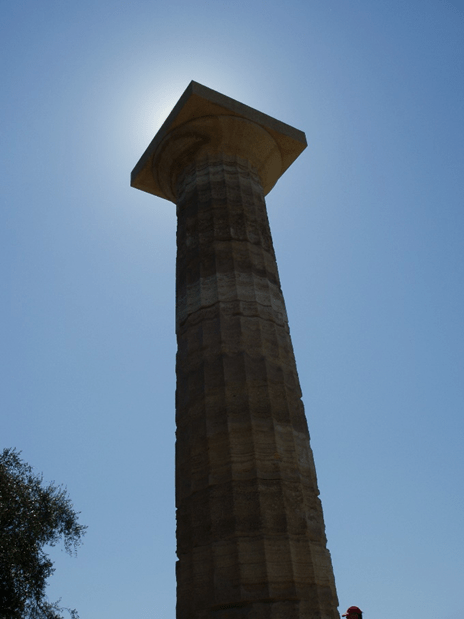
I’ll use this photo of a temple column in Olympia to ponder a bit what Paul has to say about food sacrificed to idols. It seems, as more research goes on about the subject, that meat was not a large part of the diet of the typical citizen of Greece. In fact, it was a very rare part of the diet. Animals were not routinely slaughtered just to provide meat for the daily meals. It was reserved for some very special occasion. I think of the story that Jesus told of the son who had wandered far from his father’s house and then when he came home, his father immediately told the servants to kill the calf that was being kept for just such a wonderful occasion. That is followed immediately by the older brother’s complaint that he was never given a little goat to roast for a party with his friends.
So what was the only place where animals were routinely slaughtered? The temples! It was in the temples that the animal sacrifices were brought. Parts of the animals were burned on the altars and the rest was offered for sale in the temple meat market. In Corinth, there was the temple to Apollo that dominated the approach to the agora, the marketplace. As people made their way to the market, they could stop off at the temple and ask the god’s blessing on their day in the market. Or they could, if the occasion presented itself, find their way around to the meat market of Apollo and buy some fresh lamb for a meal that day. The lamb had just been offered to the God in sacrifice. So now it was available for consumption.
The early Christians had a problem with how this was to work itself out in their lives. Suppose I have an important business associate coming to town. I want to serve a feast for his and his entourage since that is how he expects to be treated. After all, his products are making you a rich merchant. But the meat that would be available has been offered to an idol. How can I as a person who has chosen to follow Jesus, now go to a temple and buy the meat? Paul tells them, go ahead, but keep in mind that the one true God is the only God and that the idol is nothing. The temples were impressive, but their occupants no more than someone’s imagination. Serve God and serve some meat to your guest. Give thanks to the one who gave it. Apollo doesn’t exist. Jesus does. Enjoy the Lord!
Philippians 1:1 Paul and Timothy, servants of Christ Jesus,
To all the saints in Christ Jesus at Philippi, together with the overseers and deacons:
:2 Grace and peace to you from God our Father and the Lord Jesus Christ.
:3 I thank my God every time I remember you. 4 In all my prayers for all of you, I always pray with joy 5 because of your partnership in the gospel from the first day until now, 6 being confident of this, that he who began a good work in you will carry it on to completion until the day of Christ Jesus.
:7 It is right for me to feel this way about all of you, since I have you in my heart; for whether I am in chains or defending and confirming the gospel, all of you share in God’s grace with me. 8 God can testify how I long for all of you with the affection of Christ Jesus.
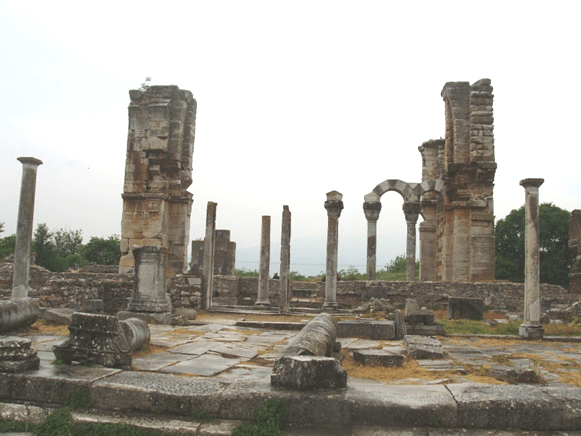
Near the spot in Philippi where the Apostle Paul was manhandled in front of the local authorities, there stand the ruins of an ancient basilica. Those in the know call it Basilica B, a very descriptive name. What it refers to is that this was to have been the second basilica that was built in the region. The first basilica in the region is only a couple of blocks away. (I guess they didn’t mind having first church and second church within blocks of one another!)
This one was begun in the 300’s with the intention of having it be a marvelously grand example of how Christians could build great places of worship. The problem was that the architect couldn’t get the spec’s right and the domed (maybe it was the doomed roof) roof collapsed while under construction. After the third such collapse, it seems the builders gave up. What we see today is what remains of their effort.
I guess I think it ironic that in the opening lines of his letter to the Philippians, Paul says, “I am confident that he who began a good work in you will carry it on to completion in the day of Christ.” It seems ironic that those who sought to begin a great work for the Lord discovered that their plans didn’t quite work out as they hoped they would. Then I am thankful that God isn’t a frustrated builder like the basilica builders were as they worked on the Plan for B. God, I too am confident, will always carry on his building project in each of us until the day we see Jesus face to face. Humanity always comes up short. We don’t have the money to finish nor the skill to build higher. We don’t have the tools to build our edifice for God. So we, in humility, come back to God and allow him to do his work in us. In the end, that will be all that matters anyway!
1Timothy 2:1 I urge, then, first of all, that requests, prayers, intercession and thanksgiving be made for everyone– 2 for kings and all those in authority, that we may live peaceful and quiet lives in all godliness and holiness. 3 This is good, and pleases God our Savior, 4 who wants all men to be saved and to come to a knowledge of the truth. 5 For there is one God and one mediator between God and men, the man Christ Jesus, 6 who gave himself as a ransom for all men–the testimony given in its proper time.
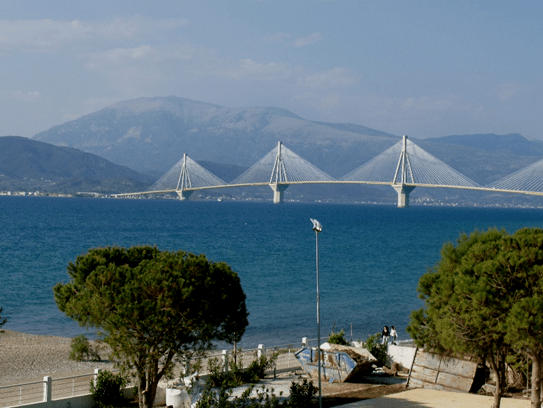
The Rio-Antirrio Bridge crosses over the Ionian Sea near Patras. It is a thing of great beauty as it stretches from shore to shore. It was designed and constructed by an engineering firm that specializes in doing something that others have thought impossible for a long time. This bridge connects the Peloponnesian peninsula with the Greek mainland. Just as the canal at Corinth was built to shorten the time it took to sail around the peninsula, so this bridge makes possible a much shorter driving time from a place such as Patras to a city like Larissa, for example. Its function is to connect two things that previously had been apart. One might say that the Rio Bridge is a mediator between the two shores of the Greek nation that the Ionian Sea divides. The bridge has made the Greek nation more of a single entity than it has ever been before in history. They are rightfully proud of the steel and concrete that make this a reality.
As I look at a structure like the Rio Bridge, I begin to think of what Jesus has done in being the mediator of a new relationship between God and humanity. In our rebellion against God, we had put a gulf between us and God that could not be bridged by anything that we undertook. There are a number of things we have tried, but we have always fallen short. When I write that I think of the bridge that was built in a city near where I once lived. It was a beautiful bridge that rose in a sweeping curve to a great height and then abruptly ended in midair. Anyone driving on it would have found themselves plunging hundreds feet to the ground below. It was lovingly called “the Bridge to Nowhere” by the local residents. In my mind, it was symbolic of how mankind has often tried to gain access to God, but has always abruptly come up short.
Now we have Jesus who has become the bridge to the very presence of God himself. When I travel that road, I am sure to arrive at the destination I has hoped for. No bumps, no detours, no shortfalls, just a sure solid road to God. Of course, I need to trust that Jesus is such a bridge. I don’t need my own efforts anymore. I just need the only bridge that there is. He’s been given by God himself for our need. God desires you to trust that Jesus will be the bridge to glory for you too. Let go of your own ideas of how to get to God. Jesus is the only way. He’s the truth! He is life itself that will never end!
 Sermons and Meditations by Bob Zomermaand