
Jonah 4:10
But the LORD said, “You have been concerned about this vine, though you did not tend it or make it grow. It sprang up overnight and died overnight. 11 But Nineveh has more than a hundred and twenty thousand people who cannot tell their right hand from their left, and many cattle as well. Should I not be concerned about that great city?”
Some of you who are in my LinkedIn circle live in cities which are vast. The largest cities in the world are places like Mexico City, Tokyo, Beijing, Dhaka, Cairo. These are cities so huge that just their name is all one needs, no country need be mentioned. It was like that in Jonah’s day. One need only say Nineveh and everyone knew about the great size of the city. I got to thinking about big cities when I was looking over the locations of my LinkedIn companions.
Then, I thought about Jonah going to the east of the city of Nineveh to pout about the ways of God. He was angry with the Lord for having mercy on a city where there were a hundred twenty thousand who didn’t know their right hand from their left. I am often haunted by the Lord’s question, “Should I not be concerned about that great city?” God is concerned about a great city where one hundred twenty thousand people don’t know their right hand from their left. How about my city in which I live? How about the cities in which I have been a pastor? Am I as concerned as God is about the lost people of these places? I confess that I am often content just sitting here at home.
But the problem is that I am not as mission minded – and where did such a term come from? – as God is. Actually rather than thinking of being mission minded, maybe I ought to begin thinking in terms of being obedient to the call of God to announce the coming of the Kingdom of God to those who are totally unaware that such thing even exists. God does not need us to be mission minded. He needs us to be those who carry out his mission.
There have been times when I had the opportunity to stand on top of a high building and look out over a great city below. No matter which direction I turned, I would have been looking out over a city that reaches miles and miles. As a tourist, I could tell myself that all I was doing was visiting. But here at home, it’s not so easy to tell myself that. Here I am at home in the laziest sense of the word. I have my personal interests, but how deeply do I concern myself about the Missio Dei as it comes to bear around me?
Should God not be concerned about this city where so many people do not know their right hand from their left either? In the Jonah story that phrase may very well be interpreted to mean that they don’t know right from wrong. All the more then that it would speak to me in my city and my time. How many who live here actually know right from wrong? I calmly tell myself that we all do. But the truth is otherwise. I just have to have the courage to be obedient to the call of God. God is concerned about the city, my city, and just as Jonah reached into Nineveh God is still reaching out in concern for the ones who do not know right from wrong. Who knows what might happen when we become obedient instead of complaisant?
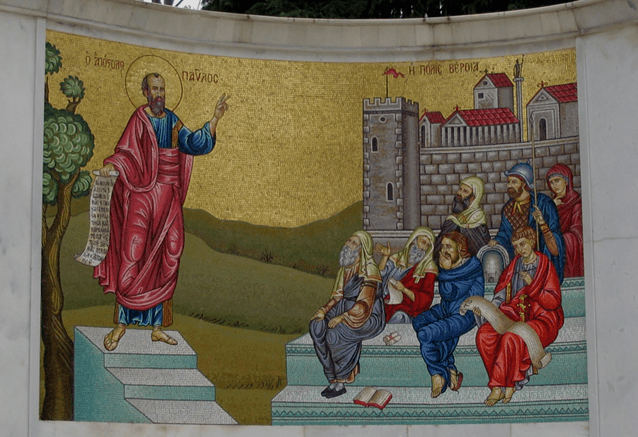
Acts 17:10 As soon as it was night, the brothers sent Paul and Silas away to Berea. On arriving there, they went to the Jewish synagogue. 11 Now the Bereans were of more noble character than the Thessalonians, for they received the message with great eagerness and examined the Scriptures every day to see if what Paul said was true. 12 Many of the Jews believed, as did also a number of prominent Greek women and many Greek men.
In Berea, modern Varia, there is a beautiful mosaic that depicts the passage from Acts 16. Pictured above, it has Paul standing on an elevated stone and preaching from thee Scriptures to the Bereans who themselves are searching the Scriptures to see if what Paul is saying is actually the truth.
It is of interest to note that the artist seeks to depicts not just one class of people who are listening to Paul, but many different people. At the lower right is one who is inscribing Paul’s message so it will not be lost. Notice that the scribe is left-handed! Perhaps that is Timothy who has joined Paul not long before on his journey as he came through Lystra. There is the older Jew at the lower left who has laid his sacred book at his feet and listens intently to Paul. He knows the Scriptures that Paul is referring to. He has only to recall that which he has memorized from his prayer book to know that the one Paul is preaching about is the Christ. There is the one in the middle who whispers to another while holding a scroll of the Word of God in what I call thee Old Testament. He is filled with wonder at what Paul is saying and is asking the next person what this might mean for their walk with God. The one next to him hides his face as he is awestruck by the message. In the back row are the Greek scholar, the Roman soldier, and the Gentile noble woman who all are intently listening. It is, says the artist, a gathering of the best of Berea from both Jewish and Gentile backgrounds. They are receiving the Word in faith.
In the book of Acts, Luke tells us that these who are pictured as listening to Paul are noble people. They are people who are willing to pay attention to the message. They are God’s people. Oh that we in our day might be so eager to hear the Word! In many parts of the world, it seems that the spirit of the residents of Berea lives on. But it is also true that many in my North America are much more reluctant to be searchers of the Word. We like our theology in baby spoon sizes, already half digested so that we do not have to do the hard work of seeking to know if such things as the Scriptures say are true. I keep hoping that will change!
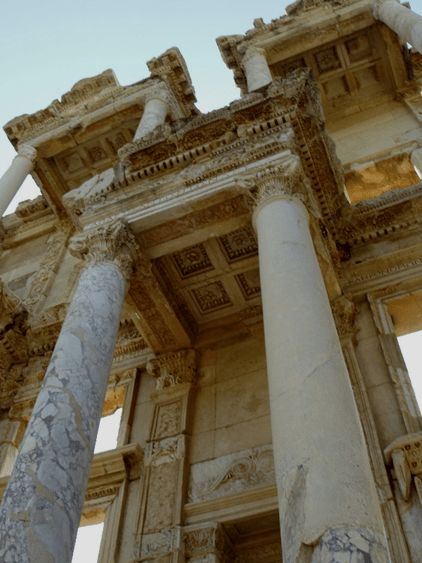
Ephesians 1:3 Praise be to the God and Father of our Lord Jesus Christ, who has blessed us in the heavenly realms with every spiritual blessing in Christ. 4 For he chose us in him before the creation of the world to be holy and blameless in his sight. In love 5 he predestined us to be adopted as his sons through Jesus Christ, in accordance with his pleasure and will– 6 to the praise of his glorious grace, which he has freely given us in the One he loves. 7 In him we have redemption through his blood, the forgiveness of sins, in accordance with the riches of God’s grace 8 that he lavished on us with all wisdom and understanding. 9 And he made known to us the mystery of his will according to his good pleasure, which he purposed in Christ, 10 to be put into effect when the times will have reached their fulfillment–to bring all things in heaven and on earth together under one head, even Christ.
The library of Celsus was not in Ephesus when Paul was there, but it appeared only a couple of hundred years later. From the point of view of our time frame, it was soon after Paul had preached the good news to the Ephesians. One of his immediate themes in the letter he wrote to the Ephesians was the call to be sure that they realized that God was the one who gave wisdom and knowledge to them. In the library that was to appear some time later, the Ephesians would gather in one place a great deal of all the learning that the ancient Greeks had mastered.
Yet, the issue of what made for wisdom was the call of God in their lives. Wisdom, Paul was saying, lies not so much in what you know, but in whom you know. The call of God in the life of Paul was such that he saw that so much of the knowledge he had taken in during his years of study under some of the best teachers of his day was just so much fluff when he came to know Jesus. For if he could not see how something could relate to the person in whom all things hold together, then he must have it wrong. It was not that his powers of observation were so faulty; it was that he simply did not know enough about Jesus to understand how he was in control of that particular area of life. The problem was not in the central role in the universe that Jesus played (plays), it was in how Paul could understand that knowledge in relationship to Jesus.
My observation is that much of what passes for knowledge today is a poor attempt to keep Jesus out of our learning. It is as if we are asked to check our brains at the door of a library. We know that there is a person who holds this all together, but we cannot admit it out loud for fear of being branded a non-scholar. The truth of the matter is that Jesus is the one who invites us into his library of truth. He doesn’t want us to check our brains at the door. Neither does he want us to check our hearts at the door. They both belong in the library of the lord. After all, He is the one who holds them together.
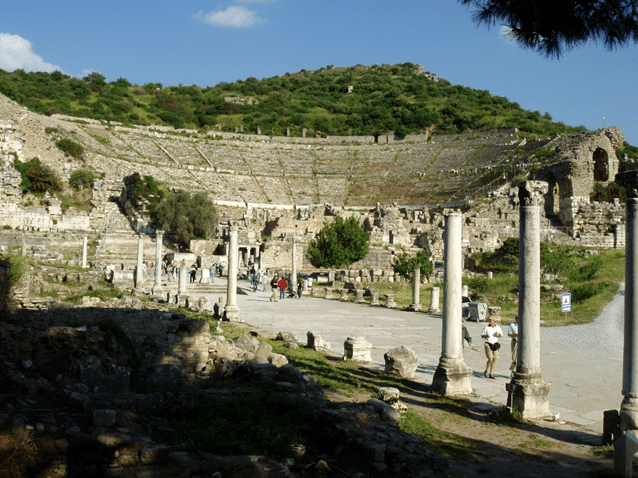
Acts 19:23 About that time there arose a great disturbance about the Way. 24 A silversmith named Demetrius, who made silver shrines of Artemis, brought in no little business for the craftsmen. ……..
27 There is danger not only that our trade will lose its good name, but also that the temple of the great goddess Artemis will be discredited, and the goddess herself, who is worshiped throughout the province of Asia and the world, will be robbed of her divine majesty.”
:28 When they heard this, they were furious and began shouting: “Great is Artemis of the Ephesians!” 29 Soon the whole city was in an uproar. The people seized Gaius and Aristarchus, Paul’s traveling companions from Macedonia, and rushed as one man into the theater. 30 Paul wanted to appear before the crowd, but the disciples would not let him. 31 Even some of the officials of the province, friends of Paul, sent him a message begging him not to venture into the theater.
In Ephesus we had the opportunity to visit the theater where the “disturbance” went on as the crowd was in an uproar. As I was standing in the spot where we took the photo, I could imagine Paul standing there with his friends as they watched the riot going on. I could just see Paul saying, “Look, I’ve got to get in there! This is the best opportunity I will have to speak to over 20,000 people at once!” But the men with him were not about to allow Paul to risk heading into the theater.
I have to admire a man like Paul. He was absolutely fearless when it came to advancing the word of God. He would never tell himself that this or that was too dangerous, or that he had to be careful of how what he had to say might strike those to whom he spoke. Paul was a man who was more concerned about the eternal destiny of those he would speak to than he was of his own safety. We had the opportunity to stand on the stage of the theater. One could imagine the scene as the seats filled with shouting citizens who were every concerned that their city was being slighted by the preacher called Paul.
I wonder if there could ever be that much excitement generated by a preacher in that United States. I have a feeling that we don’t make anyone all that disturbed by what we have to say. But if we are to stand in the tradition of Paul and his selfless love of those who needed to know the Lord, we will need to become much more fearless and be as ready as Paul to wade into the fray so that we can stand up, stand up for Jesus. May each of us find Paul to be an inspiration to courage under fire in our calling to be witnesses for the Lord Jesus.

Hebrews 12:1 Therefore, since we are surrounded by such a great cloud of witnesses, let us throw off everything that hinders and the sin that so easily entangles, and let us run with perseverance the race marked out for us. 2 Let us fix our eyes on Jesus, the author and perfecter of our faith, who for the joy set before him endured the cross, scorning its shame, and sat down at the right hand of the throne of God. 3 Consider him who endured such opposition from sinful men, so that you will not grow weary and lose heart.
Travel mate John Gable posed for this shot at the starting line in the stadium in Olympia. He’s got his eyes fixed on the finish line that lays a few hundred yards away. Just seeing him posed here reminded me of the verses from Hebrews that I quote above.
When we look at John we see him standing there, his feet bare with his heels in the little trenches that were the starting blocks. In our modern races, the runners would have their toes in the starting blocks, but the Greek athletes began with their heels in the starting blocks. But there is something else to notice, John is encumbered with all sorts of things. He’s got a hat on, his sunglasses are held on by some dangling thing around his neck. He’s got a fanny pack on his fanny. AND he’s got his clothes on.
In the Olympic stadium, an athlete would run with nothing holding him back. He had nothing but his body to think about. And when he set his eyes on the goal, his body didn’t matter anymore. It became the means to win the prize. The race was marked out for him. Once the race began, he was going to let nothing get in the way of winning the crown that was promised to the one who ran with grace and speed.
As we made our way around the stadium in Olympia, it was tempting to imagine how the athlete might have felt walking out into the stadium and being surrounded by 40,000 excited fans who were cheering on their city’s athletes. The adrenaline rush had to be almost overwhelming as the athletes took their places at the starting line.
The writer to the Hebrews calls that scene to the minds of his readers as he says, look we are surrounded by a cloud of witnesses who have been faithful in following God for all their lives. Now it is our turn to fix our eyes on Jesus and to run in the race he has marked out for us. The one we are looking to follow is at God’s right hand; that is our finish line. That’s one that is worth aiming for!
Psalm 8
:1 O LORD, our Lord,
how majestic is your name in all the earth!
You have set your glory
above the heavens.
:2 From the lips of children and infants
you have ordained praise
because of your enemies,
to silence the foe and the avenger.
:3 When I consider your heavens,
the work of your fingers,
the moon and the stars,
which you have set in place,
:4 what is man that you are mindful of him,
the son of man that you care for him?
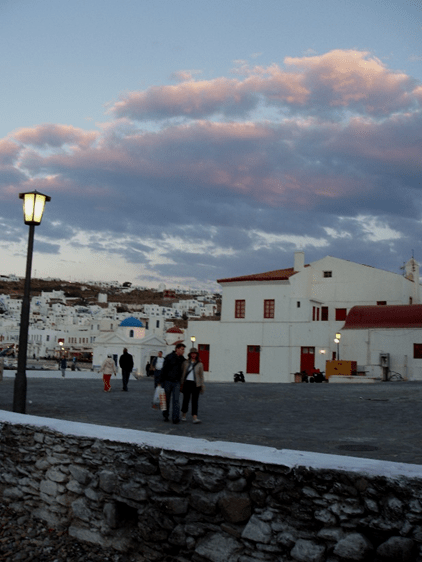
When I look at pictures of a calm sunset, I find myself often repeating the words of Psalm 8. O Lord, our Lord, how majestic is your name in all the earth! I take note especially of the words, What is man that you are mindful of him? (The Today’s New International Version puts it this way, “What are mere mortals that you are mindful of them, human beings that you care for them?”)
The sunset on Mykonos was one of the more obvious ones for us as we traveled around the Aegean. The reason was that we had been hoping to have some hours before nightfall to explore around the island, but after a late arrival and hurried disembarkation, we had a mere hour or so of sunset light to make our way around the island. That made me very aware of the sunset and I was usually checking to see how slowly the sun was setting. Did we have a little more time before the sunlight left us and we had to make our way around an unfamiliar place in the dark? One that had been designed by generations gone on before to thwart the encroachment of pirates by making the streets a maze of interconnectedness!
Oh to be like Joshua (see Joshua 10: 10-14) at a time like this and command the sun to stand still so that we might have the light for a while longer. OK, so you’re going to remind me that happened so that God’s will in judgment could be realized. This was just a google-eyed tourist wishing the sun would stand still for him! But still, it would have been quite the event to remember from our trip!
The glory of God in the sunset over Mykonos will be etched on my mind for some time. I was so eager to see the manmade things, that our time pressure it might just have been God’s humorous way of reminding me that his handiwork outdoes anything that a human being has ever done. The beauty of his handiwork far outshines even the best of what we human beings have set our hands to. To him be the glory in all the earth!

Acts 16:6 Paul and his companions traveled throughout the region of Phrygia and Galatia, having been kept by the Holy Spirit from preaching the word in the province of Asia. 7 When they came to the border of Mysia, they tried to enter Bithynia, but the Spirit of Jesus would not allow them to. 8 So they passed by Mysia and went down to Troas. 9 During the night Paul had a vision of a man of Macedonia standing and begging him, “Come over to Macedonia and help us.” 10 After Paul had seen the vision, we got ready at once to leave for Macedonia, concluding that God had called us to preach the gospel to them.
The call of the Lord that came in a dream to Paul one night was memorialized in this large stirring mosaic in Varia. The people of what was ancient Berea have built this in memory of the one who obeyed the call of God to bring the gospel to their ancestors. This mosaic pictures a man in Greek clothing calling Paul to come over here to help us.
As we read the opening verses of Acts 16, we find Paul and his companion Silas, together with others who joined them in the ministry, seeking the Lord’s guidance as to where they were to go. Who was on God’s heart? Who was the Lord longing to see come into his Kingdom? Where did they live? I can imagine Paul and his companions asking that question again and again as they encounter various problems which they see as the hand of God holding them back from certain areas of the Roman world. So they finally come to a town called Troas.
Here it seems Paul may have gotten sick since the doctor named Luke, the author of the Gospel of Luke and the Book of Acts, joins up with the traveling group. But one night, Paul sees a vision. A man of Macedonia is begging him to come over to his land to help. Immediately they set sail for the region we call Greece today.
So often in our lives we just know what God wants and we don’t wait upon his direction. We pursue our ways and our thoughts. But God is the one who is in charge of the world. He’s even in charge of our lives. Our plans must always be laid before the Lord to seek his will. In fact, it’s best to seek his will before we make our plans. Has your life been open to God’s plans or do you run ahead of him on your own?
Psalm 104
:1 Praise the LORD, O my soul.
O LORD my God, you are very great;
you are clothed with splendor and maje
:24 How many are your works, O LORD!
In wisdom you made them all;
the earth is full of your creatures.
:25 There is the sea, vast and spacious,
teeming with creatures beyond number–
living things both large and small.
:26 There the ships go to and fro,
and the leviathan, which you formed to frolic there.
:33 I will sing to the LORD all my life;
I will sing praise to my God as long as I live.
:34 May my meditation be pleasing to him,
as I rejoice in the LORD.
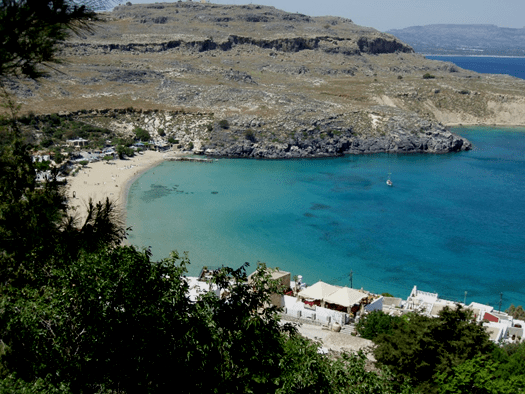
In the mind of the Psalmist, the Mediterranean Sea which he looked at was vast and spacious. Of course, to anyone who is a mere human being, the sea is vast. It is a humbling thing to get a vision of the sea as it stretches out in front of us.
On our trip to Greece, we saw only a small part of the Mediterranean Sea. We sailed around the Aegean in a ship that would have struck the Psalmist as vast and spacious in and of itself! Yet even such a ship took a considerable amount of time to traverse the vast spaces of the ocean. We stopped, for example, near Lindos. As we climbed the hills around Lindos, we had opportunity to look out over the harbor below us. The clarity of the water was what struck me with its wonder. As we look out over the harbor, we can literally see it getting deeper as the color of the water goes from a light blue green to a deep blue.
Then my heart wants to reflect on the glory of the Lord in his creation. I often think of how I seek out the fingerprints of God in his handiwork. But it wasn’t hard to do when sailing the Aegean. There the beauty of God’s work stood out in the way the islands stood out above the sea; the way the sea glistened in the sun; and the way that the sky met the horizon.
May the glory of God be honored among all peoples! May his name be known over all the earth! May his grace in giving us this world in which to live be acknowledged by every living creature! O my heart, praise the Lord!
Philippians 3: 4 If anyone else thinks he has reasons to put confidence in the flesh, I have more: 5 circumcised on the eighth day, of the people of Israel, of the tribe of Benjamin, a Hebrew of Hebrews; in regard to the law, a Pharisee; 6 as for zeal, persecuting the church; as for legalistic righteousness, faultless.
:7 But whatever was to my profit I now consider loss for the sake of Christ. 8 What is more, I consider everything a loss compared to the surpassing greatness of knowing Christ Jesus my Lord, for whose sake I have lost all things. I consider them rubbish, that I may gain Christ 9 and be found in him, not having a righteousness of my own that comes from the law, but that which is through faith in Christ–the righteousness that comes from God and is by faith. 10 I want to know Christ and the power of his resurrection and the fellowship of sharing in his sufferings, becoming like him in his death, 11 and so, somehow, to attain to the resurrection from the dead.
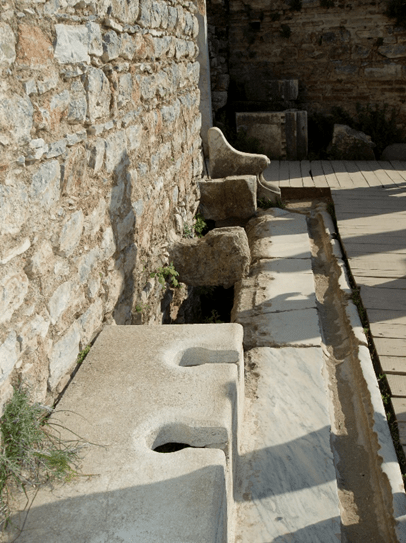
Of course, any time one visits an ancient site and comes cross the public toilets, it’s a time for just having to sit down and relax a bit. The ancient Greek cities were masters at plumbing. These toilets are found in the central part of the old city of Ephesus. Nearby there are pipes dating from the time of Paul that are still capable of carrying water. They have lasted through numerous earthquakes and thousands of years of potential deterioration, but continue to be usable. The Greeks developed what were actually flush toilets. Beneath the “seating” was a water course which flushed away the sewage.
The reason I included a photo of this is because it helps us to understand a bit of what Paul wrote to the Philippians. When he was writing of the reasons he had to be confident that God would be excited about him, he followed his list with the statement that he counted all this as so much rubbish, which could also be translated sewage. All the good things about Paul’s personal history were only so much sewage to be flushed away at the public toilets.
I am convicted by this thought every time I turn to Philippians again. Here Paul is reminding those in Philippi who were of some standing in society of what their social class did for them with God. Lydia, for example, was a seller of purple so she was of the merchant class entitled to doing business with royalty. The jailor who had heard Paul singing in the night was a soldier of some standing, etc. None of that matters. What matters is that I humble myself before God and receive his grace in Jesus Christ. As Paul puts it, I want to know Jesus and the power of his resurrection. That is what really matters. I must become less that Jesus may become more! That is true especially in my own mind!
Isaiah 40:28 Do you not know?
Have you not heard?
The LORD is the everlasting God,
the Creator of the ends of the earth.
He will not grow tired or weary,
and his understanding no one can fathom.
:29 He gives strength to the weary
and increases the power of the weak.
:30 Even youths grow tired and weary,
and young men stumble and fall;
:31 but those who hope in the LORD
will renew their strength.
They will soar on wings like eagles;
they will run and not grow weary,
they will walk and not be faint.
A friend of mine has an unusual hobby—at least I think it is. He races pigeons. He has a large coop, I guess one calls it, for his pigeons in his garage. There the pigeons have a home. It is to this home that the pigeons return when they race against other hutches from other hobbyists. It is really quite amazing to find out how fast these birds are. Well, sometimes they are fast, other times they stop off to see the local sights as they make their way home.
I guess it’s not a wonder that the ancient Greeks too were fascinated with flying. From the stories and legends of the wax winged Icarus getting too close to the sun and falling into the ocean to the winged horse Pegasus, the Greeks had a longing to fly. The modern day delight in tiny personal aircraft that may be no more than a sail has brought us all a little closer to the ideal of flying on our own.
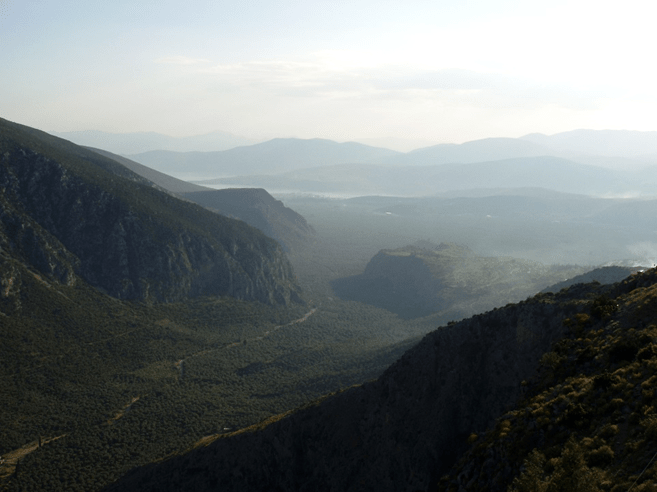
The photo here is what a bird’s eye view of the valley below Delphi might be. Mythology tells us that this is the place where the two eagles of Zeus met after flying from opposite ends of the earth. I think they might just have enjoyed the view and decided to stop here to see the sights. So Delphi became known as the navel of the earth.
The view reminded me of the promise that those who wait for the God of Israel will find their strength renewed so they can soar on wings like eagles. We can get that bird’s eye view we all long to get of our everyday world. What is important, what is not. We need to turn our eyes on the Lord in order to understand our lives. We need to wait upon the wisdom that only God can give and then we will soar and see the beauty of the world as only the eagle has the privilege of seeing it. Wait for God. He will give you vision for your life!

1Timothy 2:1 I urge, then, first of all, that requests, prayers, intercession and thanksgiving be made for everyone– 2 for kings and all those in authority, that we may live peaceful and quiet lives in all godliness and holiness. 3 This is good, and pleases God our Savior, 4 who wants all men to be saved and to come to a knowledge of the truth. 5 For there is one God and one mediator between God and men, the man Christ Jesus, 6 who gave himself as a ransom for all men–the testimony given in its proper time.
The Rio-Antirrio Bridge crosses over the Ionian Sea near Patras. It is a thing of great beauty as it stretches from shore to shore. It was designed and constructed by an engineering firm that specializes in doing something that others have thought impossible for a long time. This bridge connects the Peloponnesian peninsula with the Greek mainland. Just as the canal at Corinth was built to shorten the time it took to sail around the peninsula, so this bridge makes possible a much shorter driving time from a place such as Patras to a city like Larissa, for example. Its function is to connect two things that previously had been apart. One might say that the Rio Bridge is a mediator between the two shores of the Greek nation that the Ionian Sea divides. The bridge has made the Greek nation more of a single entity than it has ever been before in history. They are rightfully proud of the steel and concrete that make this a reality.
As I look at a structure like the Rio Bridge, I begin to think of what Jesus has done in being the mediator of a new relationship between God and humanity. In our rebellion against God, we had put a gulf between us and God that could not be bridged by anything that we undertook. There are a number of things we have tried, but we have always fallen short. When I write that I think of the bridge that was built in a city near where I once lived. It was a beautiful bridge that rose in a sweeping curve to a great height and then abruptly ended in midair. Anyone driving on it would have found themselves plunging hundreds feet to the ground below. It was lovingly called “the Bridge to Nowhere” by the local residents. In my mind, it was symbolic of how mankind has often tried to gain access to God, but has always abruptly come up short.
Now we have Jesus who has become the bridge to the very presence of God himself. When I travel that road, I am sure to arrive at the destination I has hoped for. No bumps, no detours, no shortfalls, just a sure solid road to God. Of course, I need to trust that Jesus is such a bridge. I don’t need my own efforts anymore. I just need the only bridge that there is. He’s been given by God himself for our need. God desires you to trust that Jesus will be the bridge to glory for you too. Let go of your own ideas of how to get to God. Jesus is the only way. He’s the truth! He is life itself that will never end!
Mark 1:29 As soon as they left the synagogue, they went with James and John to the home of Simon and Andrew. 30 Simon’s mother-in-law was in bed with a fever, and they told Jesus about her. 31 So he went to her, took her hand and helped her up. The fever left her and she began to wait on them.
:32 That evening after sunset the people brought to Jesus all the sick and demon-possessed. 33 The whole town gathered at the door, 34 and Jesus healed many who had various diseases. He also drove out many demons, but he would not let the demons speak because they knew who he was.
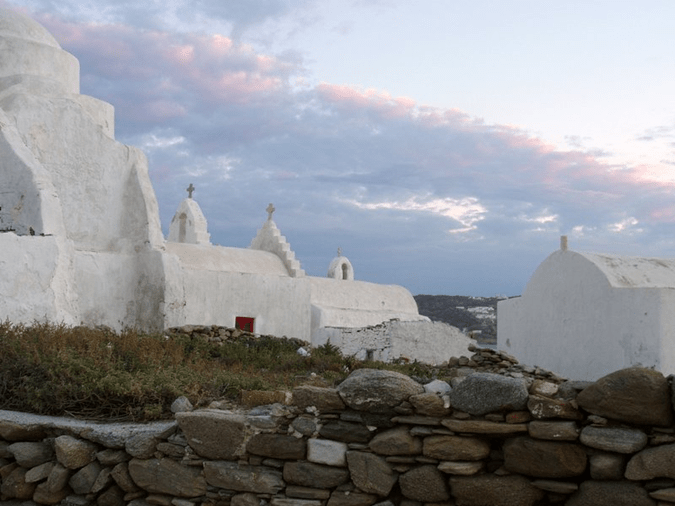
I have often in my life tried to imagine what a village like Capernaum might have looked like. What did the buildings look like? What did the people do as they gathered at the door of the house where Jesus was? Of course, my imagination did not have the experience of a Mediterranean village so that I could draw the picture in my mind of what it was like.
Then we went on this trip to Greece and the villages simply boggled my mind. I found them to be so intriguing with their narrow streets, their houses set together, and their sunsets! Wow, the sunsets! Now the idea of a village where the people would gather after sunset comes brilliantly to mind and I read the stories with far greater appreciation.
Just imagine: the glorious sunset of a Sabbath day’s evening that everyone was watching for with trembling anticipation. Why? Because as soon as the sun set, the next day began. That meant that the Sabbath day’s rest was over, and the activities that would occupy the following day were begun before the darkness of dusk set in. On this day, however, something quite different takes place. The people gather all those who are ill and as the sun’s final rays are giving way to twilight, they come seeking the Light of the World. They find Jesus who brings the light of healing and wholeness into their loved ones’ lives again. They discover that the God who made the sunset with all its glory also creates the sunrise of a new relationship with his people in the one we call Jesus.
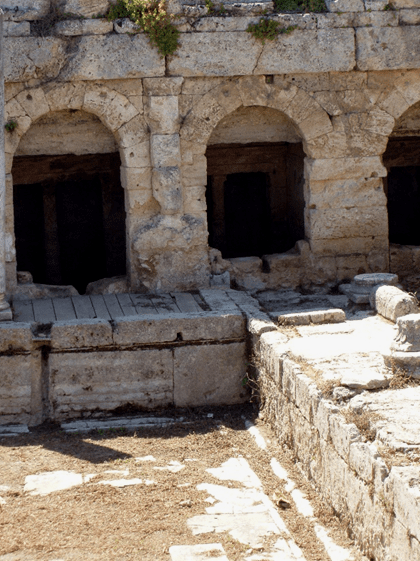
Matthew 2:16 When Herod realized that he had been outwitted by the Magi, he was furious, and he gave orders to kill all the boys in Bethlehem and its vicinity who were two years old and under, in accordance with the time he had learned from the Magi. 17 Then what was said through the prophet Jeremiah was fulfilled:
:18 “A voice is heard in Ramah,
weeping and great mourning,
Rachel weeping for her children
and refusing to be comforted,
because they are no more.”
:19 After Herod died, an angel of the Lord appeared in a dream to Joseph in Egypt 20 and said, “Get up, take the child and his mother and go to the land of Israel, for those who were trying to take the child’s life are dead.”
Pictured here is the fountain of Pirene in Corinth. It was said that this fountain was the result of Pirene, an ancient mythological figure, weeping for her children. She had a son named Cenchrias (his name has been given to one of the harbors of Corinth; his brother’s name is given to the other!). When Artremis accidentally killed Cenchrias, Pirene wept so long and so deeply that she became an eternally running spring of water. Her spring still runs to this day; in fact, we drank from a water fountain that is supplied by the water of Pirene’s spring.
About the time that the ancient ruling fathers of Corinth were building the structure that is pictured here, Jeremiah was using that same thought to peer in the Lord’s future and to see that there was going to be a time when a national matriarch, Rachel, would be heard weeping in Ramah, a region near to Jerusalem where her tomb is located. It was in Ramah that the exiles of Jeremiah’s day were gathered and deported from the Promised Land. Jeremiah, whose ear was attuned to the spiritual realities of the day, could hear Rachel weeping to see her children carried off in disgrace. That is fulfilled in the days of Jesus when the King named Herod went to Bethlehem and slaughtered the boys of the town. While the fountain of Pirene was a monument to the capricious nature of the gods; Bethlehem is the symbol of the cruelty of humanity to ourselves.
Today, it is Rachel’s tears that have the most meaning in the world. Millions around the world know the one whom Herod sought to destroy. They call him Jesus Christ, the Lord, the King of Kings and Lord of Lords.
Psalm 46
:1 God is our refuge and strength,
an ever-present help in trouble.
:2 Therefore we will not fear, though the earth give way
and the mountains fall into the heart of the sea,
:3 though its waters roar and foam
and the mountains quake with their surging.
Selah …..
:
8 Come and see the works of the LORD,
the desolations he has brought on the earth.
:9 He makes wars cease to the ends of the earth;
he breaks the bow and shatters the spear,
he burns the shields with fire.
:10 “Be still, and know that I am God;
I will be exalted among the nations,
I will be exalted in the earth.”
:11 The LORD Almighty is with us;
the God of Jacob is our fortress.
Selah
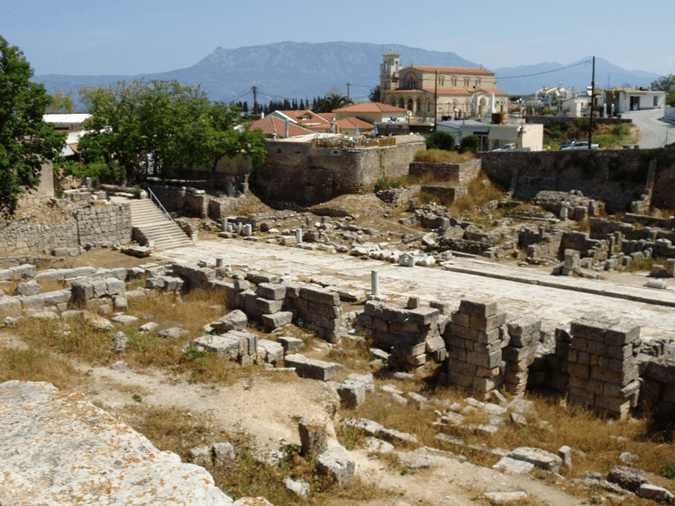
When we walked onto the site of ancient Corinth, the most forbidding thing was the sheer silence of it all. Only birds were making any sounds. The traffic sounds were off in the distance. The “sound of silence,” as Simon and Garfunkle called it, was beating on my ears. To think, this place which once throbbed with the busyness of hundreds of thousands now lies quietly in the places where the stones fell. It told me of the transitory character of life. What we look upon as a thriving invincible place in a thousand years may be as deserted as this place is today. What stands out is the (admittedly much more recent) church of Saint Spyridonas which now presides over the area of old Corinth.
When I think of the view that we saw there, I am taken back to Psalm 46 which calls upon the reader/listener/ singer to find a time to be silent. In the silence we are to listen for the whisper of God coming to us. That whisper will tell us that he, God, is our refuge and our strength. The wealth of ancient Corinth, its imposing buildings, nor its beautiful site were able to make it eternal. The very stones themselves cry out that this is a city which did not have the foundations that will last into eternity. See what desolation the Lord has brought about! He is the one who has made wars to cease in this spot. Now, in silence, we who visit need to hear the whisper of God confirming his power and divinity which he shares with no other!
1Corinthians 1:1 Paul, called to be an apostle of Christ Jesus by the will of God, and our brother Sosthenes,
:2 To the church of God in Corinth, to those sanctified in Christ Jesus and called to be holy, together with all those everywhere who call on the name of our Lord Jesus Christ–their Lord and ours:
:3 Grace and peace to you from God our Father and the Lord Jesus Christ.
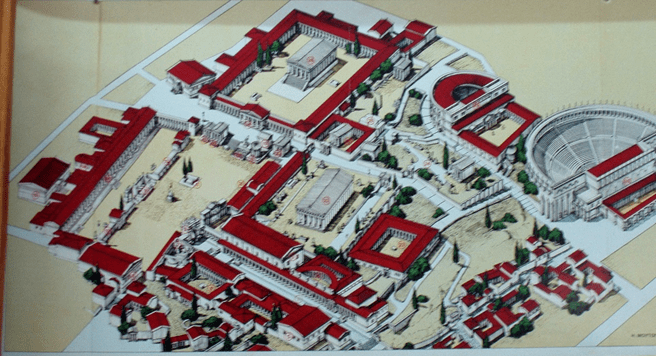
What we have pictured here is an archaeological artist’s rendering of what the layout of the heart of ancient Corinth might have been. This is found in the Corinthian archaeological museum. It gives us the view of the commercial and religious heart of ancient Corinth that an eagle might have had. It was here that the 300,000 Corinthians came to have the needs for life met. There were all sorts of material goods available in the marketplace and the temples provided a smorgasbord of religious choices. One can almost imagine the crowds jostling each other for position near the bakers’ stalls, the fruit sellers, and the other providers of basic necessities.
It was to this place that Paul came to call people to the service of Jesus. He came to establish an ecclesia, a church. The term ecclesia is an ancient Greek concept of being called out. At times there would be gatherings of those who belonged to the citizenry of a city—which by the way was by no means everyone! When the meeting would be announced, the town crier would go about the city calling all the citizens to meet, probably in the theater pictured in the upper right of the photo. That group would be called the ecclesia, a term that we translate as church today. The church of Jesus Christ is the gathering of all those who are called to be holy in Christ.
The church is the gathering of the citizens of the commonwealth of heaven. When we gather it is to demonstrate to the world that we are privileged to be those who rule with Christ. We already get a taste of that eternal honor which will be ours when Jesus comes again. Then we will those whose status in the ecclesia is seen by the entire world. Then there will a great gathering of the called out ones from the whole history of the earth. We will gather before the throne of God. There we will be affirmed as those whose sin and guilt has been washed by the blood of the Lamb of God. He has taken us to himself and we are citizens of that eternal kingdom.
The biggest challenge for me is to learn how to live that called out life that speaks of holiness to all who are observing me. In Corinth, the citizen was expected to exemplify the best the city had to offer. So too, I am called to exhibit the glory of the coming kingdom. I wonder how the King thinks I’m doing.
Psalm 104:24 How many are your works, O LORD!
In wisdom you made them all;
the earth is full of your creatures.
:25 There is the sea, vast and spacious,
teeming with creatures beyond number–
living things both large and small.
:26 There the ships go to and fro,
and the leviathan, which you formed to frolic there.
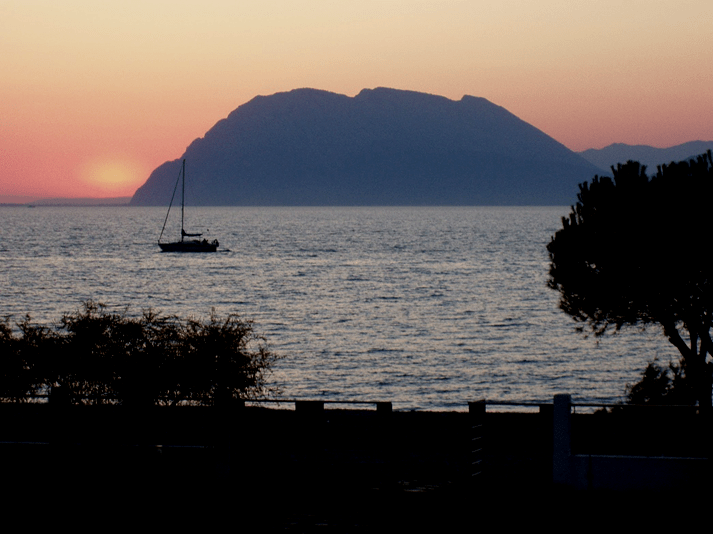
One of the defining characteristics of the nation of Greece is the sea. Everywhere we went, the sea was relatively nearby. The beauty of the sea in that part of the world is so remarkable that I often found myself gawking out the window at the wonder of it all. Or in the case of the three days of cruising on the Aegean Sea, to simply be a part of the expanse of the sea with the myriad islands was a deep delight.
The sunset pictured here was from our hotel on the northwest coast of the Peloponnesian peninsula. God’s divine handiwork was in abundant evidence on this evening as the sun settled behind the mountains across gulf of Patras on the Ionian Sea. The doxology of the Psalmist comes to mind when one is marveling over the beauty of such a sight. “How many are your works, O Lord!” The only one who could have done such a great thing is the Lord our God.
So I found myself on that evening immersed in the majesty of the ocean, the mountains, and the sun. Knowing that I had the privilege of seeing this and knowing the God who made it all was quite beyond my imagination. My heart was stirred with a joy that bubbled up in a murmur of awe. It was like the hush that comes over people as they enter a great cathedral. The once loud voices are reduced to a murmur. Wildly shouting voices would have seemed out of place in those moments as the sun set. God’s awesome greatness settled upon me and I knew I was in the presence of the Lord for a few moments of wonder.
I love those moments of wonder. They connect me to God in ways that everyday life often does not. I know I need those moments. I have them at home too, but on this trip, they came more often. Was it because I was away from my everyday pressures or was it because God’s handiwork is so profound in Greece?

1Corinthians 6:12 “Everything is permissible for me”–but not everything is beneficial. “Everything is permissible for me”–but I will not be mastered by anything. 13 “Food for the stomach and the stomach for food”–but God will destroy them both. The body is not meant for sexual immorality, but for the Lord, and the Lord for the body….
17 But he who unites himself with the Lord is one with him in spirit.
18 Flee from sexual immorality. All other sins a man commits are outside his body, but he who sins sexually sins against his own body. 19 Do you not know that your body is a temple of the Holy Spirit, who is in you, whom you have received from God? You are not your own; 20 you were bought at a price. Therefore honor God with your body.
The temple of Apollo that stands near the entrance to the ancient marketplace of Corinth is a remarkable sight. The stone columns that have stood for centuries and centuries are solid reminders that the ancient Greeks believed in doing things big for their gods. The temples of the gods that we were observing were never little miniature affairs. There was always a sense of grandeur and power that was architecturally communicated to the religious adherents of the faith. The temple was the way the faithful told others of how much their God meant to them.
Now along comes Paul and he writes to the Corinthians, “You know that temple of Apollo that you pass each time you go shopping? Remind yourself that you personally are the temple of the one true God.” And in Corinth, there was also the temple of Aphrodite that had the temple prostitutes available for “hire.” Once again, Paul reminds the Corinthians that their bodies have also been hired, this time by God himself. The Lord intends that the followers of Jesus will understand that they have been intimately united with Jesus. That means their very bodies and lives will now be the illustration for the entire world to see. His urging for the Corinthians, and us, of course, is for us to get that deep inside of our hearts. When we do, it becomes a daily reminder to so structure our lives that we are architecturally communicating the grandeur and power of our God. We are his temple! We are the evidence of the reality of God to all around us.
Hmm. I wonder what others see in me?
1Corinthians 6:12 “Everything is permissible for me”–but not everything is beneficial. “Everything is permissible for me”–but I will not be mastered by anything. 13 “Food for the stomach and the stomach for food”–but God will destroy them both. The body is not meant for sexual immorality, but for the Lord, and the Lord for the body. 14 By his power God raised the Lord from the dead, and he will raise us also. 15 Do you not know that your bodies are members of Christ himself? Shall I then take the members of Christ and unite them with a prostitute? Never! 16 Do you not know that he who unites himself with a prostitute is one with her in body? For it is said, “The two will become one flesh.” 17 But he who unites himself with the Lord is one with him in spirit.
:18 Flee from sexual immorality. All other sins a man commits are outside his body, but he who sins sexually sins against his own body. 19 Do you not know that your body is a temple of the Holy Spirit, who is in you, whom you have received from God? You are not your own; 20 you were bought at a price. Therefore honor God with your body.
It was somewhat dismaying to me to hear our tour guide telling of the “ancient ways” that made Corinth be known around the Mediterranean world as the place of sexual excess. She explained that our mores cannot and should not be applied to the ancient world. The practice of visiting the temple prostitutes was a part of how the people practiced their faith. It is said (although there is significant dispute about it) that at the top of the mountain pictured here, there were 1000 willing young women in the temple of Aphrodite who would meet your every fantasy.
It was easy for the Corinthians to be so influenced by their culture that they would have adopted the sexual morality of their city as their own. After all, that is how they used to live! But now Paul challenges them to live in such a way that God is the one who controls their body and its desires. God’s ways are not those of the culture. You were bought with a price, the price of the blood of Jesus! Now you need to understand that your body is his and he will not share it with a prostitute. There are honorable ways to engage our sexuality, but “playing the Corinthian” as it was called, was/is not! In our own day, the pressure of the culture is that our bodies are for sex and sex is for the body, so let’s get on with it. God, however, calls us to believe that we can have the power to honor God with our bodies and so to master the desires that God created in us and sin has distorted.

1Corinthians 16:5 After I go through Macedonia, I will come to you–for I will be going through Macedonia. 6 Perhaps I will stay with you awhile, or even spend the winter, so that you can help me on my journey, wherever I go. 7 I do not want to see you now and make only a passing visit; I hope to spend some time with you, if the Lord permits. …
:13 Be on your guard; stand firm in the faith; be men of courage; be strong. 14 Do everything in love.
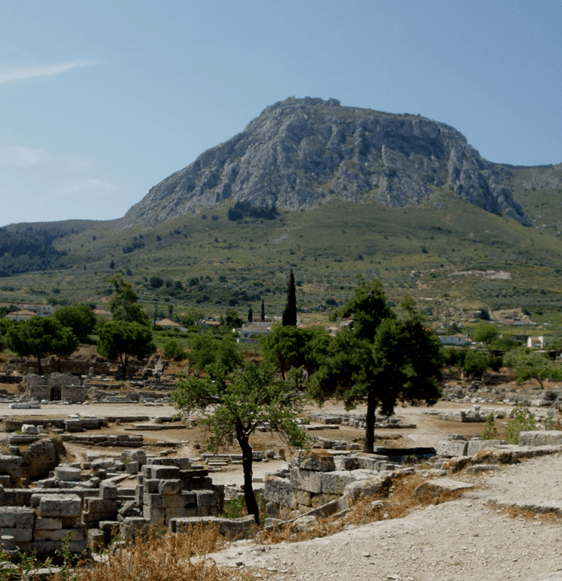
1500 feet above ancient Corinth stood the ancient Acrocorinth. It was/is a great outcropping of rock that rises like a majestic sentinel over the Corinthian isthmus. In our day, there are several medieval fortifications that have been built on the top of the mountain in order to stand guard over the area.
I will be the first to admit that I did not try to make it from the spot pictured here to the top of the Acrocorinth in the forty-five minutes allotted for our stop. It would have meant more exertion than I had energy available to me at that time! That doesn’t mean I was uninterested in the view one gets from this height, however. I did manage to find my way over to a place where I could look out over the valley below and marvel at the beauty of the sight.
I think that Paul would have been thinking of how the sentinels of the Corinthians would be watching from the top of the Acrocorinth for any invading enemies. One could see for miles and miles from this height. Any invader would have to deal with being deprived of the element of surprise. But that didn’t stop Corinth from being destroyed on occasion. In fact, from 146 B.C. to 42 B.C., Corinth did not exist. In 146, they had been overrun by the Romans who put all the males to death and sold all the women and children into slavery. In Paul’s day, they would have had that memory vividly in mind.
So Paul writes to the church, “Be on your guard; stand firm in the faith; be men of courage; be strong.” He wants the members of First Church Corinth to realize that they are never on such solid ground that their faith is impregnable. Just as their city could go from glory to destruction, so too the church that is not vigilant and courageous in confronting the work of the evil one among them will fall.
We do well to heed that call to vigilance ourselves. Any time we carelessly think we have big enough walls is the time an insider can betray our faith in our own strength. We need always to stand firm in the faith we have in Jesus.
1Peter 2:13 Submit yourselves for the Lord’s sake to every authority instituted among men: whether to the king, as the supreme authority, 14 or to governors, who are sent by him to punish those who do wrong and to commend those who do right. 15 For it is God’s will that by doing good you should silence the ignorant talk of foolish men. 16 Live as free men, but do not use your freedom as a cover-up for evil; live as servants of God. 17 Show proper respect to everyone: Love the brotherhood of believers, fear God, honor the king.
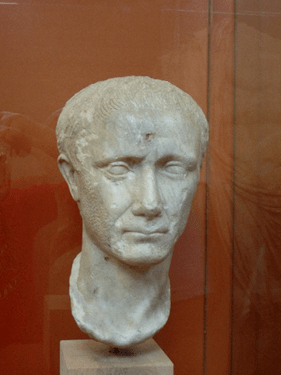
The Romans had an ingenious idea when it came to their statues
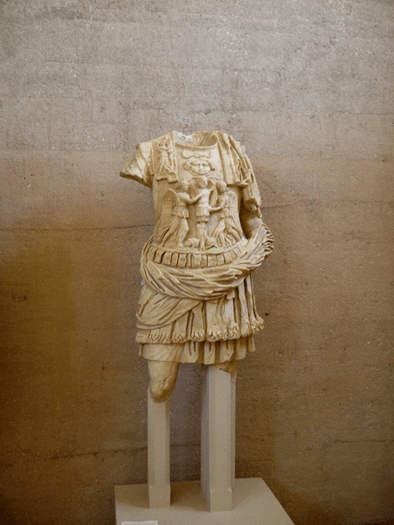
honoring the emperors who ruled over them. They made the statues somewhat disposable. After all, when God raised up one man to rule and then deposed him, they didn’t want to throw away all the old statues that were perfectly serviceable. So what they did was to carve the statues in two pieces. The lower torso and legs were standard and the head was removable. So as one emperor followed another, they could simply replace the head of the statue and have a statue that honored the emperor.
I guess that is how it goes when you change emperors regularly. The new guy doesn’t want any suggestion that the people still honor the former emperor he defeated in order to gain the title of emperor for himself. At the time when the epistle of Peter was written, Nero was the emperor and it would shortly be under Nero that Peter lost his life.
The logical necessity of the removable head came to be seen shortly after Peter’s death. In the year 68-69, there were four different men who were acclaimed as emperor. One ruled for all of two months! The sculptors would barely have had time to begin their work on the marble head for the emperor statues around the empire, when it was time to do someone else’s image.
Even though Peter was aware of the depths to which Nero could sink in his evil, still he called his readers to honor the king. No matter who it was that ruled as emperor, Peter writes that they are deserving of honor as the king. I think we have lost much of that thought about our rulers. We, in our culture, have become so enamored of our own importance that we often forget that those who are in authority in our lands deserve our honor. In our lives, may the Spirit remind us that our honor needs to be given to those whom God has placed in authority over us. Pray for the rulers! You and I will be glad we did!
 Sermons and Meditations by Bob Zomermaand